
EKMT permits in 2026 and waste transport in the EU
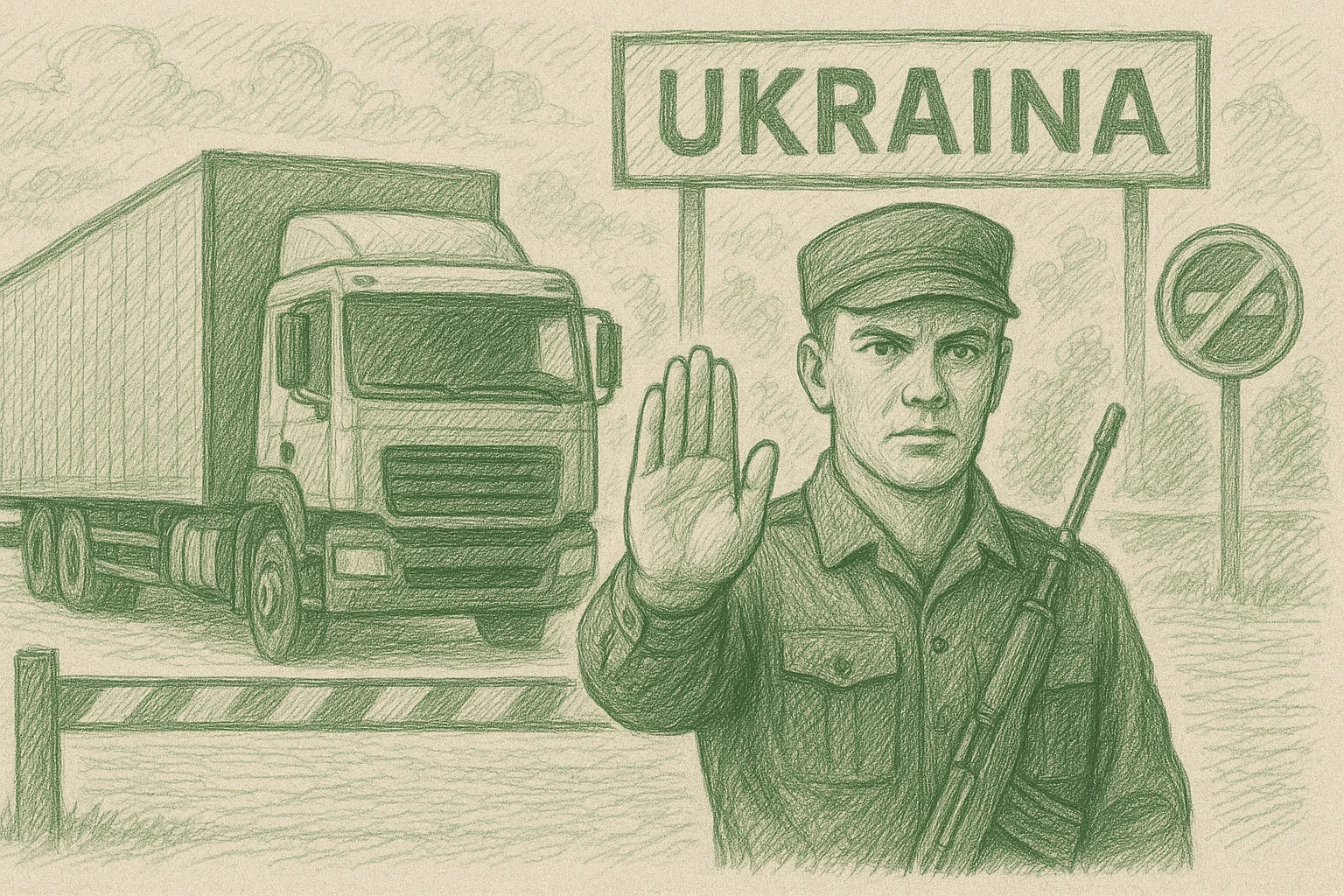
In 2026, EKMT permits will only be issued in digital form, but – as it turns out – not for Polish companies. Foreign carriers will be able to freely use e-EKMT on eastern routes, while Polish carriers will only be able to watch – with limited access to the existing, well-paid routes. However, instead of passively waiting for the consequences of this situation to hit revenues, it is worth treating 2026 as a wake-up call and a moment to change strategy. If the East becomes less accessible or closes completely, the advantage will be to build a new, stable pillar in waste transport to Western EU countries, based on well-chosen national permits and growing demand for environmental services.
What do EKMT permits really mean for Polish companies in 2026?
EKMT (European Conference of Ministers of Transport) permits are multilateral permits for international road haulage between countries belonging to the EKMT/ITF agreement. In practice, they give the carrier a kind of „golden ticket”: instead of obtaining separate bilateral licences, they can make multiple journeys to different countries – especially to eastern destinations and in transit through third countries. Even if you do not currently travel to the East, the EKMT indirectly affects the entire market: it shapes rates, cargo availability and competition from companies that use these permits.
According to the International Transport Forum, the current member states of the ECMT are Albania, Armenia, Austria, Azerbaijan, Belarus, Belgium, Bosnia and Herzegovina, Bulgaria, Croatia, the Czech Republic, Denmark, Estonia, Finland, France, Georgia, Germany, Greece, Hungary, Ireland, Italy, Latvia, Liechtenstein, Lithuania, Luxembourg, Macedonia, Malta, Moldova, the Netherlands, Norway, Poland, Portugal, Romania, Russia, Serbia and Montenegro, Slovakia, Slovenia, Spain, Sweden, Switzerland, Turkey, Ukraine, and the United Kingdom. The EKMT document allows for the transport of items outside the EU and EFTA.
Source: International Transport Forum
Does your company also face problems with EKMT permits?
Find out what to do to avoid becoming dependent on changes in the East. Let's talk about potential solutions.:
e.nadolna@ekologistyka24.pl , +48 881 045 376
j.blazewicz@ekologistyka24.pl , +48 500 867 153
In this context, 2026 becomes a critical moment. EKMT permits will be fully transferred to the electronic system in 2026, while in Poland The presidential veto blocked a bill that would have opened our market to digitisation. EKMT. If the situation does not change, foreign companies will continue to use e-EKMT as normal, while Polish carriers may be left with limited access to lucrative eastern routes and stronger competition in the west. This is a real cause for concern – but also an impetus to develop a plan B, which could be a stable waste transport segment in the EU, based on permits other than EKMT.
No transport to the East: business implications
- Fewer shipments to the East and transits through third countries
Many carriers have built their position precisely on eastern routes. Routes to Turkey, Ukraine, the Caucasus or further afield, as well as transits through third countries, often rely on EKMT. If EKMT permits remain out of reach for Polish companies in 2026, some of these routes will simply disappear. The client will choose a carrier that can legally perform the transport without additional arrangements.
- The advantage of foreign competition
As a result, Polish companies will find themselves in an uncomfortable situation. For many shippers, simplicity is what counts: one system, one permit, minimum problems. If a carrier from another country has full access to e-EKMT, but a Polish carrier does not, the decision becomes obvious. This is not just a matter of individual loads. It is a risk of gradually losing long-term contracts that have kept the fleet running so far.
- Uncertainty kills strategy
The worst thing is the lack of predictability. You don't know whether the law will be amended in a few months' time or whether political conflict will block the changes again. In such a situation, it is difficult to plan investments in new vehicles, trailers or additional bases. That is why sensible companies are starting to look for a second leg. Even if the East is still functioning, it is necessary to simultaneously build a business in a segment where the rules are clear and based on more stable foundations.
Instead of giving up on the industry, change your approach.
- West instead of East – a different work ethic
Transport within the European Union is governed by different rules. Of course, you still need to take care of the Community licence, tachographs, rates and drivers„ working hours. However, the market is more predictable in terms of regulations and less dependent on sudden political decisions. Instead of a few large contracts ”to the East", you can build a network of permanent relationships within the EU. Of particular interest here is the segment where demand is growing and barriers to entry limit the number of competitors.
- Waste – a formally difficult but stable segment
Across the EU, there is growing pressure to recycle, recover raw materials and reduce landfill. This is not a passing fad, but a direction enshrined in climate policy. Each such decision generates further streams of waste that must be transported to a disposal site. We are talking about industrial, municipal, packaging and construction waste. Clients require carriers, who not only have free vehicles, but above all operate in accordance with environmental regulations. The more formal requirements there are, the less temptation there is to „jump” into this segment overnight. This, in turn, creates an advantage for companies that take the issue seriously and are prepared to invest in the appropriate permits and procedures.
Waste transport in the EU – where is the real profit?
Typical areas and models of cooperation
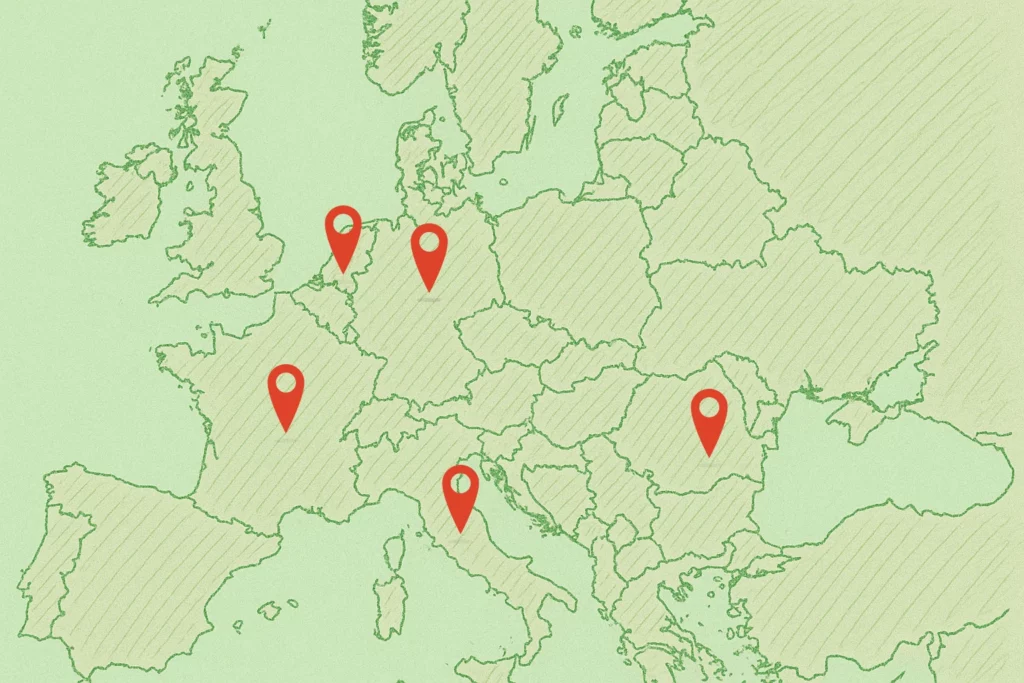
In Western Europe, waste often moves in predictable, repetitive streams. Examples of such relationships include:
In many cases, we are talking about long-term agreements between installations, logistics operators and carriers. This model provides greater stability than individual „shots” to a third country, which depend on the current political situation or the availability of physical permits.
Barrier to entry as your advantage
To transport waste, a Community licence and a suitable trailer are not enough. You also need:
Many carriers give up at this stage. They prefer simpler orders, even if the margin is lower. Meanwhile, a company that takes care of the formalities enters a segment where there is less competition and higher customer loyalty.
Why installations seek „organised” carriers
The waste holder is responsible for who they entrust with its transport. Errors in documents may result in a penalty for him and for the carrier. It is no surprise that serious companies prefer to pay a little more but work with a carrier who:
If you want to build a long-term relationship with them, you need to show that you are not afraid of formal requirements. On the contrary, you can treat them as part of your advantage.
What documents are required to legally transport waste within the EU?
Community licence – the absolute minimum
First, the obvious: a Community licence. Without it, there can be no question of legal commercial transport between EU countries. In the context of waste, however, this is only the first step.
You may have a licence, an excellent fleet and great drivers, but still not meet the conditions set by the waste legislation in a given country.

National waste transport permits
Each Member State applies its own model:
This is where the real organisational work begins. It is necessary to determine what permits are required for specific relationships, what documents need to be collected, what deadlines apply, and what fees are charged by the authorities.
A well-prepared carrier does not do this by trial and error. They enlist the help of people who:
Order a waste transport permit for your chosen EU country
Are you considering entering the waste market, but are concerned about the formalities? Leave them to us – we will provide you with comprehensive assistance:
e.nadolna@ekologistyka24.pl , +48 881 045 376
j.blazewicz@ekologistyka24.pl , +48 500 867 153
Environmental registers – BDO and foreign equivalents
Another piece of the puzzle is environmental registers. In Poland, this is the BDO, while other countries have their equivalents.
Not being listed in the relevant register can effectively close the door to working with serious clients. That's why it's worth getting this sorted out before you start actively looking for waste collection jobs.
In practice, a model in which one team assists the carrier works well:
How to prepare before the start of the year to enter the waste market
Analyse your routes and fleet
To begin with, take a look at what you have today. Consider the following:
This will enable you to assess whether entering the waste market requires a complete business overhaul or rather a clever reorganisation of part of your fleet.
Select your target markets in the EU
The next step is to select the markets. Germany, the Netherlands, Italy, France, Romania, or Finland – each of these countries has its own specific requirements.
Instead of „taking on everything at once”, it is wiser to set priorities. For example:
A well-prepared plan also takes into account what waste transport permits are required in these countries and how long it takes to obtain them.
Formalities: permits, registers, procedures
Once you know where you want to travel, you need to take care of the formalities. At this stage:
You can do it yourself. Or you can entrust this part of the work to a team that specialises in waste permits and cross-border waste shipments. This saves you time, which you can use to build relationships with future customers.
First orders and scaling
Once the formalities have been completed, it is worth starting with a few well-thought-out pilot orders. This will enable you to:
On this basis, you can scale your business, sign longer contracts, and invest in an additional fleet dedicated to waste.
What we can do for you
It is worth taking advantage of the help of a team that on a daily basis:
Instead of basing the company's future solely on EKMT permits in 2026, you can build a stable segment in waste transport and thus become independent of a single, politically sensitive instrument.
Are you unsure whether waste transport is right for you?
Talk to us. We will answer your questions, explain the procedures and help you get through them without any problems.:
e.nadolna@ekologistyka24.pl , +48 881 045 376
j.blazewicz@ekologistyka24.pl , +48 500 867 153
Do not wait until the last minute.
The year 2026 will be a test for many carriers. On the one hand, we have EKMT permits, which are becoming an increasingly uncertain pillar for Polish companies. On the other hand, there is a segment where the rules are strict but predictable – waste transport in the EU.
You have no influence over how quickly legislators will deal with the digitisation of permits. However, you do have full control over whether your company:
If you want your business to emerge from the upcoming changes stronger rather than weaker, start acting now. Find out which waste transport permits in the EU will be crucial for you. Then, step by step, build a business pillar that does not depend on the fate of a single permit system.