
Veterinary number for UPPZ transport: documents for inspection
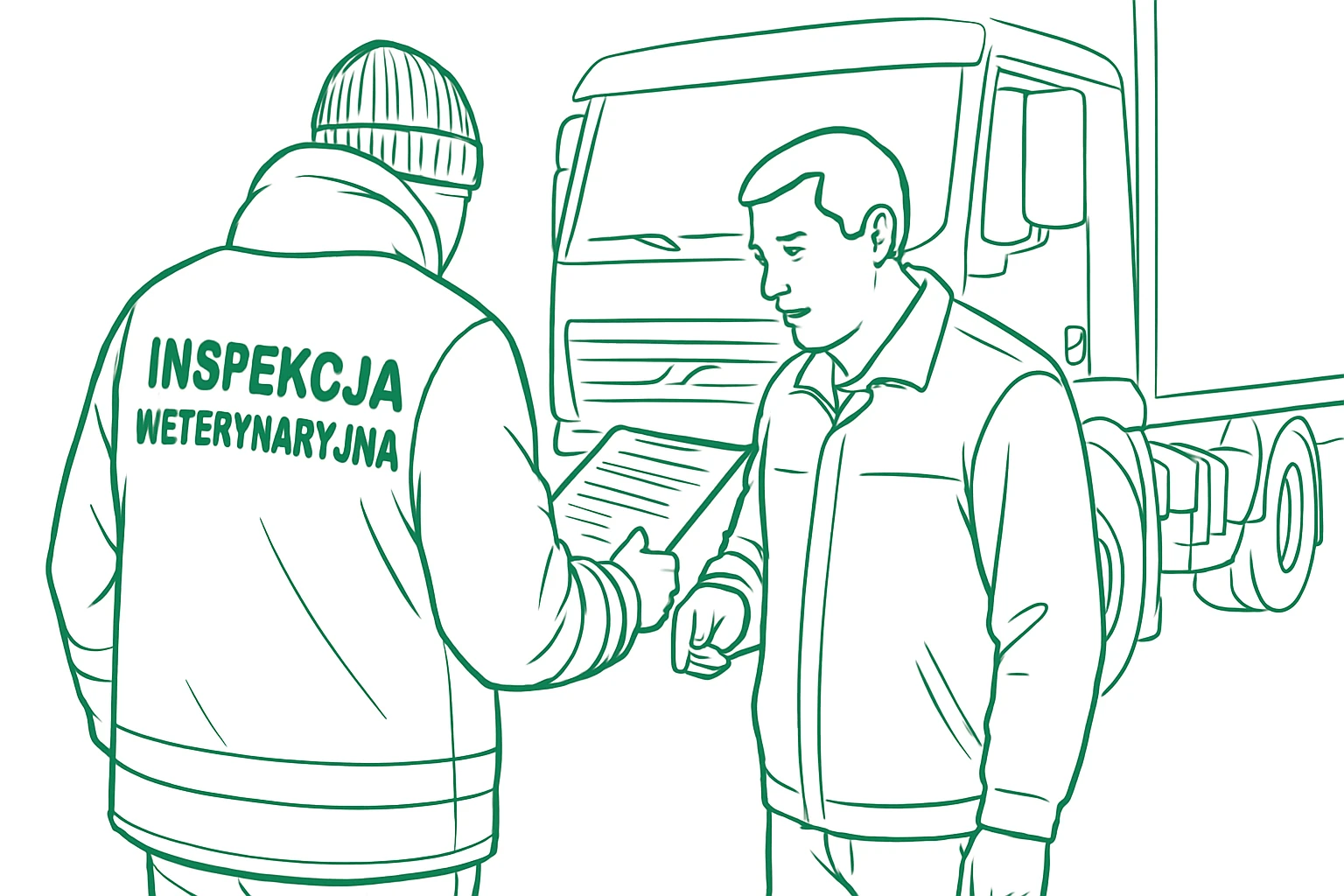
If you are applying for a veterinary number for UPPZ transport, treat the Veterinary Inspection check as an audit of your work organisation. The inspector verifies three things in particular: whether you can demonstrate the traceability of the transport (what, where it is coming from and where it is going), whether you have hygiene rules in place (cleaning and disinfection with records) and whether the documents are consistent and kept up to date. If any of these elements are missing, the inspection will certainly take longer. In that case, corrections, additions and additional explanations will be necessary, and this will simply delay the start of your business. That is why this article is practical. Below you will find a checklist of documents and records arranged exactly according to what the Inspectorate most often checks before assigning a number. Importantly, this is not a „one-day” list. It is material that is worth returning to when changing vehicles, with a new client, or when you enter into other types of UPPZ and want to maintain compliance without stress.
Is this article for you?
This article will be helpful if:
Consider these three points. If even one of them applies to your situation, our list will be indispensable for you:
Veterinary number for transport UPPZ – with us, you will obtain it without any difficulty
Do you require a WNI number for the transport of animal-derived materials? Contact us. We will provide you with comprehensive assistance:
e.nadolna@ekologistyka24.pl , +48 881 045 376
j.blazewicz@ekologistyka24.pl , +48 500 867 153
What is WNI and why do you need it as a UPPZ carrier?
The VIN (Veterinary Identification Number) is assigned to entities supervised by the Veterinary Inspection. It is assigned after an inspector has carried out an inspection and a decision has been issued for the specified scope of activity (e.g. transport of UPPZ). It is formal proof that you can perform a specific activity under veterinary supervision.
Important: The WNI describes the company and the scope and manner of its operations that have been reported. Therefore, the Inspectorate checks whether specific processes are repeatable: documents must match and records must be updated on an ongoing basis.
WNI in practice: what is it useful for?
Firstly, the WNI must be present in the transport documents. When transporting UPPZ, the shipment must be accompanied by a commercial document (and in certain cases – a health certificate). These documents typically include the name and address of the carrier and the veterinary number. In other words, the inspection authorities want to see who is transporting the material and on what basis.
Secondly, WNI is linked to traceability. The inspector expects you to be able to reconstruct the transport history in case of any questions: what you picked up, when, from whom and to whom you delivered it. That is why we emphasise records and data consistency in this article, because this is the core of control.
Specific examples
- New customer / new order
Customers (e.g. disposal plants, intermediaries, processors) often ask directly for the carrier's veterinary number. And they have a vested interest in doing so. This allows them to verify that they are using the services of a legally operating company. - Filling in the UPPZ transport document
When transporting UPPZ, you usually have a document that describes the shipment (in practice: a „commercial document” or other document required for a given case). You enter the carrier's details in this document. This is where the WNI is needed, as it allows you to clearly identify the company performing the transport. - On-site inspection„
If the Inspectorate (or the recipient at the gate) asks, „On what basis are you transporting UPPZ?”, the shortest answer is: I have a decision/WNI + a set of documents for this specific route. Without WNI, the conversation becomes lengthy and often tense. - Records and traceability within the company
When you keep a transport log (sender → recipient → date → quantity → document), the WNI acts as an „ordering number”. This allows you to quickly show that your company has constant supervision and does not operate on an ad hoc basis. - Changing the fleet or expanding operations
When a new vehicle, driver or type of material arrives, the WNI allows you to tie everything together organisationally: you have a point of reference, making it easier to update lists, procedures and registers. This is not a formality. It is a controllable order. - Check-in/collection at the recipient's premises (gate practice)
Some recipients keep their own checklists. WNI speeds up carrier verification, as the employee on the other end does not have to guess whether they are dealing with the right company.
What is checked during an inspection (in brief)
The inspector usually follows three tracks, so it is worth preparing documents specifically for these three areas:
- Transport documents and traceability
The goods must have a „history”: what they are, how much there is, where they are coming from, where they are going, who is transporting them and on what basis. Furthermore, the UPPZ must have a commercial document for the transport. - Hygiene: cleaning and disinfection + evidence
The inspection expects not only the procedure, but also the register. Furthermore, Vehicles, containers and reusable equipment must be cleaned., wash and disinfect after use. - Signage and transport organisation
Depending on the UPPZ category, vehicle/container must have the appropriate markings.
CHECKLIST: documents to prepare for the inspection (before granting WNI)
Below is a list of documents that may be checked during the inspection preceding the assignment of a veterinary number. You can also download it as a free PDF file.
A) Formal company documents
B) Fleet and hard evidence that you are in control of transport
C) Hygiene
D) Traceability (dispatch register and related documents)
E) Operational documents: templates + real-life examples
Inspection passed, and now you want to transport your first load?
Contact our specialist. They will find the optimal solution for you and take care of the formalities. Call or write today:
p.koszynski@ekologistyka-24.pl
+48 519 516 869
You've passed the inspection – what next?
The WNI number is just the beginning
If you have successfully passed the PIW inspection and your company has been assigned a veterinary number, you have taken the first step towards legal transport of UPPZ materials. However, the most difficult task is still ahead of you. Reliable and systematic transport documentation is the key to compliance with the requirements. This will protect you from possible legal and financial consequences.
Frequently asked questions about UPPZ transport
If you transport UPPZ materials as part of your business, you must be „visible” to the Veterinary Inspection Authority and meet their requirements. Customers often require this number before starting cooperation, as it confirms that you operate legally and have the appropriate procedures in place.
Most commonly: company documents, list of vehicles and right to use them, washing/disinfection procedure, washing/disinfection register, transport documents (e.g. commercial document) and transport/shipment register. This is precisely what the checklist in the article is for..
In a nutshell: the veterinary number applies to the company. From an inspection point of view, the most important thing is that your organisation and the way you operate as a carrier (procedures, records, consistency of documentation) are assessed. Of course, the Inspectorate also looks at the vehicles, because they must be clean and secure the load, but the „core” is the company and its working standards.
No, every transport company that transports UPPZ materials must have its own WNI number. This is a direct result of the regulations, i.e. Regulations of the Minister of Agriculture and Rural Development of 27 July 2022 and Act of 16 December 2005 on products of animal origin.
Most often, the Inspectorate checks documents and asks about working methods (when you wash, how you disinfect, how you archive). It also inspects vehicles and verifies that records are kept regularly. The inspection does not have to be „terrible” if your paperwork is in order.
They should be kept for 5 years from the date of issue. Then, in the event of a possible verification, you can reconstruct the transport history without any stress.
If you use a car wash, a contract or confirmation of cooperation is very helpful. If you wash your car yourself, the Inspectorate usually expects a description of the place and method of washing, as well as a record confirming that you do so regularly.