

BiREG notification: carrier obligations and consequences of failure to comply with them
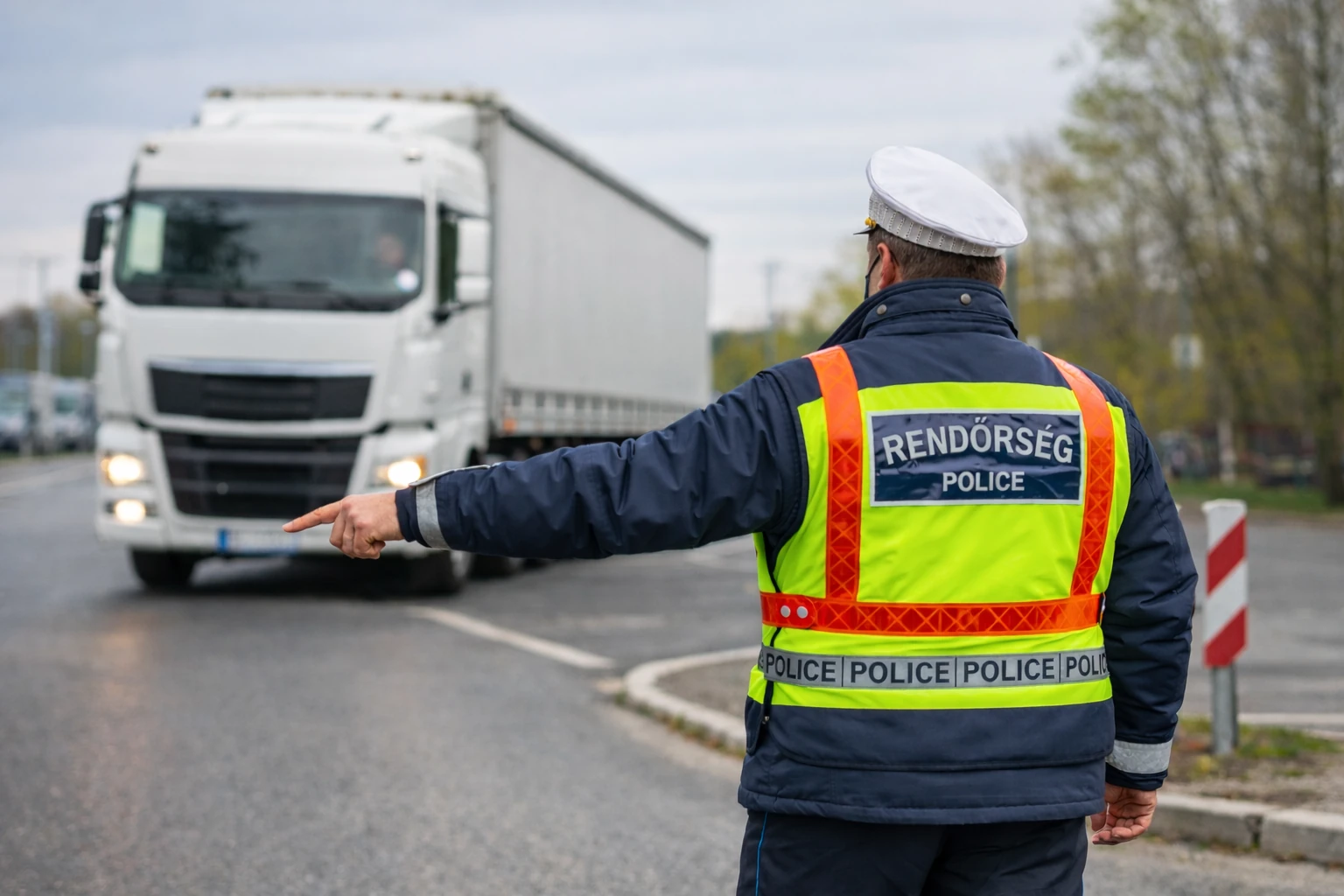
Road transport through Hungary has for several years been subject to much stricter formal control than before. One of the key surveillance tools is the BiREG notification. For many hauliers, this is still an obscure or downplayed topic. Meanwhile, for the Hungarian authorities, it is one of the first sources of information during a roadside check or an inspection at the shipper's premises. A mistake in the BiREG declaration is not a minor technical mistake. In practice, it can mean a hefty financial penalty, administrative problems and even temporary exclusion from transport operations in Hungary. Therefore, it is worth understanding exactly what the system is, where it came from and what obligations it actually imposes on transport participants.
A customer has ordered you to transport goods to Hungary, but you don't know how to go about declaring in the BiREG system?
We will do it for you comprehensively. Send us a message or give us a call and we'll take care of everything:
e.nadolna@ekologistyka24.pl , +48 881 045 376
j.blazewicz@ekologistyka24.pl , +48 500 867 153
Where BiREG came from and what problems the industry was supposed to solve
The BiREG system was introduced by Hungarian Government Decree No. 261/2011 (XII.7.), regulating the operation of road haulage. Provisions for the electronic registration of transport was added to this legislation at the end of 2020 and the system became effective on 1 January 2021. (with a short transition period).
The legislator's motivation was very specific. Hungarian authorities had been signalling for years:
BiREG was supposed to reduce these problems by registering transport electronically in advance and linking it to a specific vehicle, route and legal basis of transport.
Who is affected by the BiREG notification?
Notification to BiREG does not apply only to Hungarian hauliers. The obligation also extends to foreign companies if they carry out transports subject to Hungarian regulations. The nature of the transport and not the company's seat is therefore crucial.
In practice, there are several roles in the BiREG system, each with specific responsibilities:
SUBJECT | role in the bioreg system | RESPONSIBILITIES |
|---|---|---|
TRANSPORT | main user of the system | company registration, declaration of transport (loading, unloading, cabotage) registration of border events |
DIRECTOR | operational participant | Transmission of data for event recording (time, place, counter) |
SENDER (HU) | verifier | Verification of the notification to BiREG and of the validity of the entry permit |
RECEIVER (HU) | verifier | Verification of transport data and obligation to report infringements |
CONTROLLING BODY | supervision and enforcement | Checking data compliance and imposing penalties |
The most common mistake is to assume that the responsibility lies solely with the carrier. In reality, the system is designed so that several entities control each other.
REMEMBER!
Pursuant to the amendment of Law 261/2011. (XII. 7.), introduced by Regulation 18/2021. (I. 27.), transports carried out exclusively on the basis of a Community licence referred to in Article 4 of Regulation (EC) No 1072/2009 were exempted from the BiReg obligation. Note - this exemption does not include:
In the case of loading or unloading on the territory of Hungary, it must be verified each time that the operation is not subject to registration with BiReg - failure to notify may result in a high administrative penalty. |
Loading and unloading at BiREG - a hidden control hotspot
In the BiREG system, loading and unloading are not neutral transport stages. Hungarian legislation has consciously included these actors in the control mechanism in order to limit fictitious or improperly executed transports. In practice, this means that the shipper and unloader on Hungarian territory act as the „first filter” of transport legality.
Before allowing a vehicle to be loaded or unloaded, the Hungarian operator must check:
If any of these elements disagree, the loading or unloading should not take place. What is more, the regulations require them to report the infringement to the competent authority. In practice, this means that an error in the notification to BiREG very often comes to light even before the vehicle leaves the yard or at unloading.
From the carrier's point of view, this is a particularly dangerous moment. Contractors in Hungary are increasingly aware of their obligations and refuse to handle formally questionable transport. Even if an administrative penalty formally falls on the haulier, the business consequences occur more quickly: delays, order rupture, loss of customer confidence.
In practice, many BiREG checks start precisely with a signal from the shipper or consignee. It is for this reason that this stage of transport is one of the most common trouble spots of the entire system.
Errors in filing with BiREG and resulting penalties
Penalties for violations related to notification in the BiREG system result from Regulation 156/2009 (VII.29.), which sets out administrative fines. The most common scenarios are as follows:
One thing is worth emphasising: the penalty does not depend on whether the carriage was actually safe or fair. All that matters is compliance with the system.
Why BiREG notification is a topic not to be ignored
Notification in the BiREG system is not a formality that can be made up after the fact. The system operates in real time and is designed to reveal irregularities at an early stage of transport. Every notification, every border event and every correction leaves a trace in the system.
For the control authorities, BiREG acts as a risk map. On its basis, they select vehicles for roadside checks, analyse the repetition of infringements and verify that the company in question is actually complying with the conditions of the permits. Even a one-off error can therefore result in an increased number of inspections in the future.
Ignoring the notification obligations in BiREG also has a purely operational dimension. Lack of up-to-date procedures, lack of trained staff or reliance on driver experience often lead to situations where:
Each of these errors generates the risk of a financial penalty, but also an administrative risk. In extreme cases, the authorities may question the carrier's reliability as an operator authorised to carry out certain types of transport. This is no longer a problem of a single course, but of the entire activity.
It is therefore worth treating the BiREG filing not as a single obligation, but as part of a broader compliance system for the transport of goods to Hungary. The earlier it is sorted out, the less risk there is that a formal error will start to generate real financial and image losses.
Peace of mind in transport begins with correct notification
Notification in the BiREG system is today one of those obligations that does not forgive improvisation. The rules are precise, the controls realistic and the penalties severe. At the same time, many transport companies operate in an environment where routes change, the legal basis for transport is not always obvious and time to analyse the paperwork is sometimes limited.
Under such conditions, it is easy to make a mistake, which is not due to bad will, but to an excess of responsibilities and ambiguous interpretations. This is why more and more carriers are choosing not to transfer all responsibility to the drivers or the operations department, but to sort out the topic of BiREG in a systematic way.
We help you prepare your BiREG notification from start to finish. We analyse whether a transport is subject to notification. We verify the documents and the legal basis of the transport. We register the transports, make sure the data is consistent and react before an error becomes a breach. In this way, we take over the burden of paperwork and reduce the risks that would otherwise fall directly on the carrier.
If you are carrying out transport to Hungary and want to be sure that everything has been done in accordance with current regulations, it is worth relying on experience rather than guesswork. Get in touch with us. We will check everything and make sure that your application is prepared comprehensively.
Don't let paperwork block your orders. Entrust us with the preparation of your application in Hungary
BiREG notification is a duty that is easy to disregard, but difficult to rectify after the fact. We take over all the paperwork for notification of transport in Hungary and we reduce the risk of administrative penalties. This allows you to focus on transport and not on procedures. Call or write to us:
e.nadolna@ekologistyka24.pl , +48 881 045 376
j.blazewicz@ekologistyka24.pl , +48 500 867 153