
Waste transport: what to look out for?
Waste transport requires logistics companies to have an excellent knowledge of dynamic regulations and to maintain a fleet that meets strict technical standards. Effective planning of deliveries based on up-to-date legal requirements and reliable documentation makes it possible to avoid hefty penalties and efficiently pass authorisation verification. A professional approach to reverse logistics not only ensures operational security, but also builds contractor confidence and strengthens the company's position in the specialist services sector.
Need help with BDO registration or obtaining a waste transport permit in EU countries?
We will help you comprehensively. Just send us the information you need. Do you have questions? Call or write:
e.nadolna@ekologistyka24.pl , +48 881 045 376
j.blazewicz@ekologistyka24.pl , +48 500 867 153
BDO system as a foundation for legal transport
The Database System for Products and Packaging and Waste Management (BDO) is the focal point for overseeing the circulation of raw materials in Poland. Each entity performing their transport must have an active entry in the register, which generates a unique registration number. Without this number, the execution of any transport order is impossible and will result in the immediate seizure of the vehicle during a roadside check.
Registration with BDO imposes on the carrier obligation to keep electronic records in real time. This system allows the waste stream to be fully tracked from the point of generation to the treatment facility. Therefore, constant access to the digital platform and the ability of shippers to use it are essential for the company's operational fluidity. However, this will not be a detailed record as in the case of the waste generator, but a simplified one, based on waste transfer cards.
Key documentation in the transport of raw materials
The most important document in domestic traffic is the Waste Transfer Note (KPO), which is generated in the BDO system before the transport begins. This document contains precise data on:
For international transport, the situation becomes more complex due to the need to apply the new Regulation 2024/1157 entering into force on 21 May 2026. The carrier must use DIWASS to handle digital shipping documents and to have the relevant permits for cross-border waste shipments. Proper preparation of the forms prevents delays at borders and protects the company from accusations of illegal export of residues.
Waste transport: technical requirements for the fleet
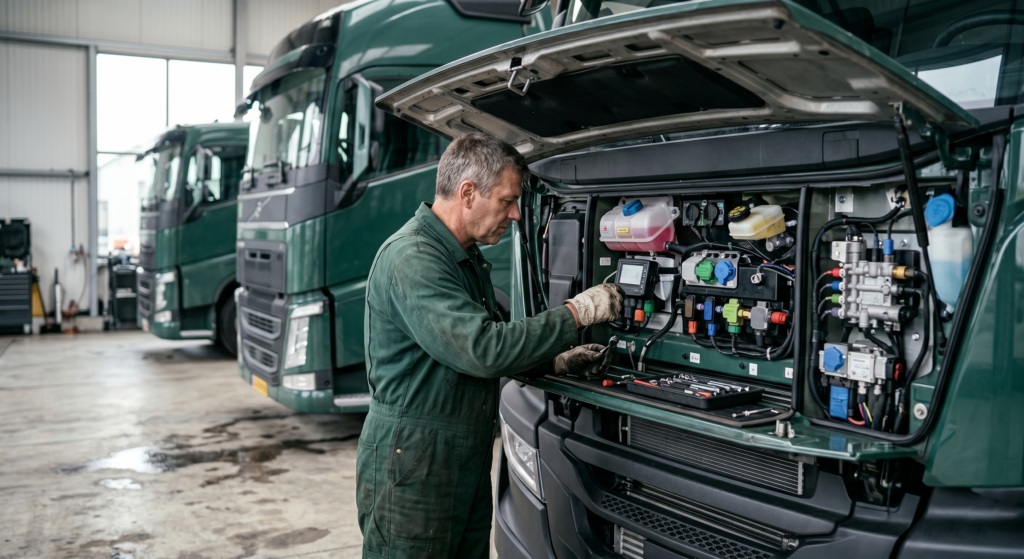
Modern rolling stock designed for the transport of recyclable materials must meet stringent tightness and safety standards. The entrepreneur selects the means of transport directly according to the physical properties of the load, taking into account the aggregate state and toxicity of the substance. Technical requirements for transporting waste include having systems in place to prevent leakage of liquids and the emission of unpleasant odours into the atmosphere.
At the same time vehicles should undergo regular technical inspections beyond standard periodic testing. Efficient lashing systems, leak-proof tarpaulins and efficient unloading mechanisms ensure that the raw material does not contaminate the public road. Investment in high-quality equipment minimises the risk of breakdowns and increases the economic efficiency of the transport processes carried out.
Vehicle markings and road visibility
Vehicles carrying waste in Poland must have a white plate with the word "WASTE" written in black. The haulier must place it on the front of the vehicle, on its external surface. According to the regulation, this inscription must be legible and the letters should be at least 100 mm high, which facilitates the work of environmental inspectors.
On the other hand, an A-plate is required for international transport, particularly through Germany. In this case, the company installs signs on both the front and rear of the vehicle to comply with European safety standards. Failure to comply with these obligations or the use of incorrectly sized plates is grounds for a high fine during a routine inspection.
Preparing the driver for assignments
The professional driver in the waste management industry acts as a guarantor of safety and procedural correctness. This person must receive specialised training in load securing and in the operation of loading equipment such as HDS or hooklifts. In addition, the employee should be familiar with the various waste codes so that he or she is able to react in emergency situations or when trying to transfer the wrong raw material.

The employer is therefore obliged to equip the driver with personal protective equipment such as reinforced gloves, reflective clothing and filter masks. Constant communication between the driver and the forwarding department makes it possible to resolve problems arising from errors in BDO documentation in real time. Professionally trained staff significantly reduce the risk of operational errors during loading and unloading.
Safety procedures during loading
The process of placing waste in the load compartment requires particular care and adherence to stationary instructions. The haulier must monitor that the weight of the goods does not exceed the permissible gross vehicle weight (GVW) and that axle loads remain within the standard. Overloading the vehicle not only damages the road infrastructure, but also drastically reduces the vehicle's manoeuvrability.
Furthermore, the correct centre of gravity positioning prevents the trailer from tipping over when cornering or braking sharply. Workers should use anti-slip mats, conveyor belts or safety nets depending on the type of material being transported. Scrupulous adherence to these rules eliminates the risk of damage to property and protects the health of those working in the loading area.
Transport of hazardous waste and ADR rules
The carriage of residues with corrosive, flammable or toxic properties requires compliance with the provisions of the ADR Convention. In this case, the guidelines for the transport of waste become much stricter and include the need for the driver to have a special authorisation. The vehicle must be equipped with appropriate fire extinguishers, sorbents and a protective kit adapted to the hazard class of the substance in question.
It is worth emphasising that each item of a consignment of hazardous waste it must bear a clearly legible warning label. The transport documentation in this scenario extends to include written instructions for the driver, which specify how to proceed in the event of an accident. By following such strict procedures, it is possible to minimise the effects of possible spills on the environment and surrounding residents.
GPS monitoring and route control

Modern waste logistics is increasingly based on advanced telematics systems. By installing GPS transmitters in vehicles, it is possible to track the route in real time and verify that the driver does not deviate from the planned course. Such a solution is an excellent evidential tool in the event of an inspection by the Environmental Inspectorate, confirming the delivery of the load to the correct destination.
In 2026, the installation of GPS transmitters in vehicles is an absolute legal requirement for a wide range of raw materials in the SENT system. At the same time, these systems allow fuel costs to be optimised by analysing driving styles and avoiding congestion. By managing logistics with such precision, companies not only comply with standards, but also implement the principles of a circular economy more effectively by better controlling the flow of raw materials.
Carrier liability and insurance
Operating a waste transport business involves a high level of operational risk, so it is essential to have a extended liability insurance. Standard carrier liability insurance often does not cover environmental damage resulting from chemical spills. Companies should therefore ensure that clauses are in place to cover the cost of site remediation following a potential road incident.
The consequence of not having adequate insurance can be bankruptcy for a company if it has to cover millions of dollars in clean-up costs. Furthermore, many principals require the presentation of a policy with a high sum assured as a prerequisite for cooperation. Sound financial security is therefore not only a legal requirement, but also an important element of a risk management strategy.
Administrative penalties for non-compliance
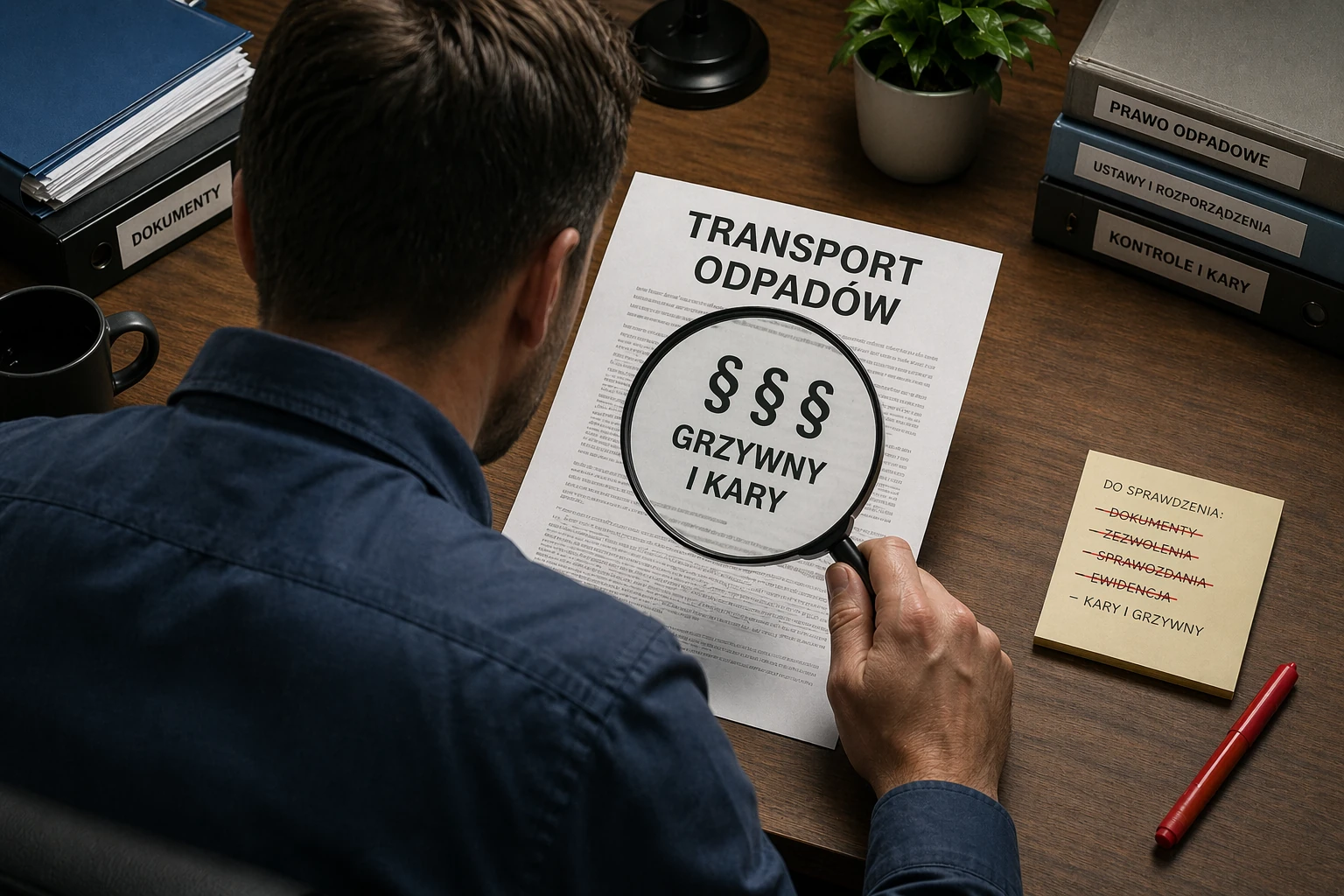
The legislator has provided for very high sanctions for violations of waste management rules. The following penalties apply for transporting raw materials without the required registration in the BDO register administrative fines of up to one million zlotys. In addition, a lack of proper vehicle marking or incorrectly filled out documentation results in fines imposed by the Road Transport Inspectorate.
Therefore, systematic control of in-house processes is the best way to protect against financial losses. Control authorities have zero tolerance for attempts to cheat on waste codes or tonnage, with the aim of eliminating the grey market. Building a business model based on full transparency and legality is the only way to grow stably in this industry.
Outlook for the industry
The waste transport process is a complex logistical undertaking that requires the synchronisation of many legal and technical elements. The key to success is a reliable approach to documentation in the BDO system and attention to the technical condition of the fleet used. Companies that invest in employee training and modern monitoring technologies gain a competitive advantage and the trust of their business partners.
In the coming years, we can expect a further tightening of regulations aimed at climate protection. For this reason, it is already worth implementing standards that go beyond the minimum legal requirements. Professional waste transport is becoming a cornerstone of the modern economy, combining economic profit with concern for the country's ecological safety.
Author: Jakub Koszyński | Editorial: Pawel Makowski