
How to legally donate waste?
Modern regulations have transformed waste management from an ethical choice into a strict legal obligation, failure to comply with which carries the threat of severe financial penalties. The legal transfer of waste now requires not only reliable segregation, but above all proficiency in the use of ICT systems and knowledge of current standards. The following analysis details procedures for the safe transfer of waste, ensuring the protection of both the ecosystem and the company's business stability.
Have waste to hand but don't know how to arrange collection? Contact us
We will check your documents, verify your entitlements and substitute a suitable car. Call or write:
e.nadolna@ekologistyka24.pl , +48 881 045 376
j.blazewicz@ekologistyka24.pl , +48 500 867 153
Definition and legal framework for the transfer of waste
Understanding the process starts with defining the roles of the participants in the waste trade. According to the Waste Act, a generator is any entity whose activity or existence generates waste. The legal transfer of waste takes place when the waste holder hands over the waste to an entity that has the relevant permit to collect or process these specific fractions.
It is worth noting that the responsibility of the generator for the waste does not end when it is loaded onto the trailer. The transferor must verify that the consignee has up-to-date administrative decisions. Only the acknowledgement of receipt in the IT system removes the burden of responsibility for the subsequent fate of these substances from the generator.
BDO system as the foundation of waste management
Product and packaging database and on waste management (BDO) is the central point for supervising the circulation of raw materials in Poland. Every entrepreneur who generates non-municipal waste must obtain an entry in this register. This system allows the control authorities to follow the path of waste in real time, which effectively limits the development of the grey market.
The BDO system user manages the records via a special electronic panel. This is where all necessary documents are generated and annual reports are submitted. Failure to register or operating without the required BDO number constitutes a serious breach of the regulations, which will result in the immediate suspension of the possibility of legally transporting waste.
Documentation: Waste Transfer Note (KPO)
The Waste Transfer Card is the most important proof that a service has been provided in accordance with the regulations. Currently, this document only exists in electronic form inside the BDO system. An entrepreneur planning a shipment must generate the card before the physical removal of waste from the site.
The KPO contains precise data on the type of waste, its weight and its code according to the waste catalogue. The KPO must be carried by the driver transporting the load in order to present it to the relevant services in the event of a roadside check. The waste consignee then confirms receipt of the load in the system, which closes the shipment process for the consignment.
Filling rules and waste codes
Precise identification of the waste code is crucial for correct documentation. The waste catalogue divides substances into groups and subgroups, assigning them six-digit designations. Incorrect categorisation of waste can lead to the entire procedure being questioned by the Environmental Inspectorate.
Therefore, the entrepreneur should regularly consult experts or use official code finders. In addition, the weight of the waste stated on the KPO must be factually correct, which requires possession of or access to a legalised scale. Reliability in completing this data ensures that the legal transfer of waste will not be questioned during an audit.
Obligations of entrepreneurs in the field of waste management
Companies operating on the Polish market have to meet a number of requirements that go beyond the mere generation of documents. Above all, it is their responsibility to store waste properly on site. Storage areas should be protected against leaks, dust and unauthorised access.
Another aspect is the need to keep up-to-date records of waste in the Waste Inventory Card (KEO). This document is a summary of all fractions generated and transferred in a given calendar year. On its basis, an annual report is drawn up, which is submitted to the relevant provincial marshal.
How to transfer waste without activity
Individuals not running a business are subject to different regulations than companies. In their case, legal waste transfer mainly concerns municipal fractions and problematic waste, such as waste electronic equipment or renovation residues. Residents of municipalities are obliged to segregate at source according to local cleanliness regulations.
Bulky or hazardous waste that cannot be disposed of in the standard bins should be taken to the Selective Collection of Municipal Waste (PSZOK). This is a systematic solution that allows citizens to dispose of troublesome items free of charge and in accordance with the law. It is worth remembering that burning waste in domestic cookers or disposing of it in the forest is punishable by heavy fines.
Comparison of legal status and obligations
| FEATURE | BUSINESSES | PRIVATE PERSONS |
| BDO system | Mandatory registration and record-keeping | No obligation to register |
| Documentation | Waste Transfer Note (KPO) | Proof of payment or contract with the company |
| Place of handover | Authorised recipient (company) | PSZOK; Communal collection points |
| Annual records | Waste Inventory Card (KEO) and reports to the Marshal | No reporting obligations |
Selection and cooperation with an authorised waste collector
Individuals can use the services of companies offering container hire for rubble or renovation waste. However, it is crucial to choose an entity with the appropriate authorisations - in particular, registration with the BDO for transport and waste processing. Before starting cooperation, it is worth verifying the contractor, paying attention to the scope of its activity, experience and possible quality certificates. A reliable recipient will not only ensure legal waste removal, but can also advise on cost optimisation and proper organisation of the entire process.
Signing a contract with a professional entity, in principle, transfers the responsibility for waste management to the service provider. However, this does not relieve the principal of the obligation to keep basic documentation - in particular the contract or proof of payment - as confirmation of the legal transfer of waste. For those obliged to keep records, it is also important that the recipient approves the KPO sheets in a timely manner to ensure continuity and correctness of the documentation. This approach not only provides formal security, but also makes a real contribution to environmental protection.
Criminal sanctions for unlawful transfer
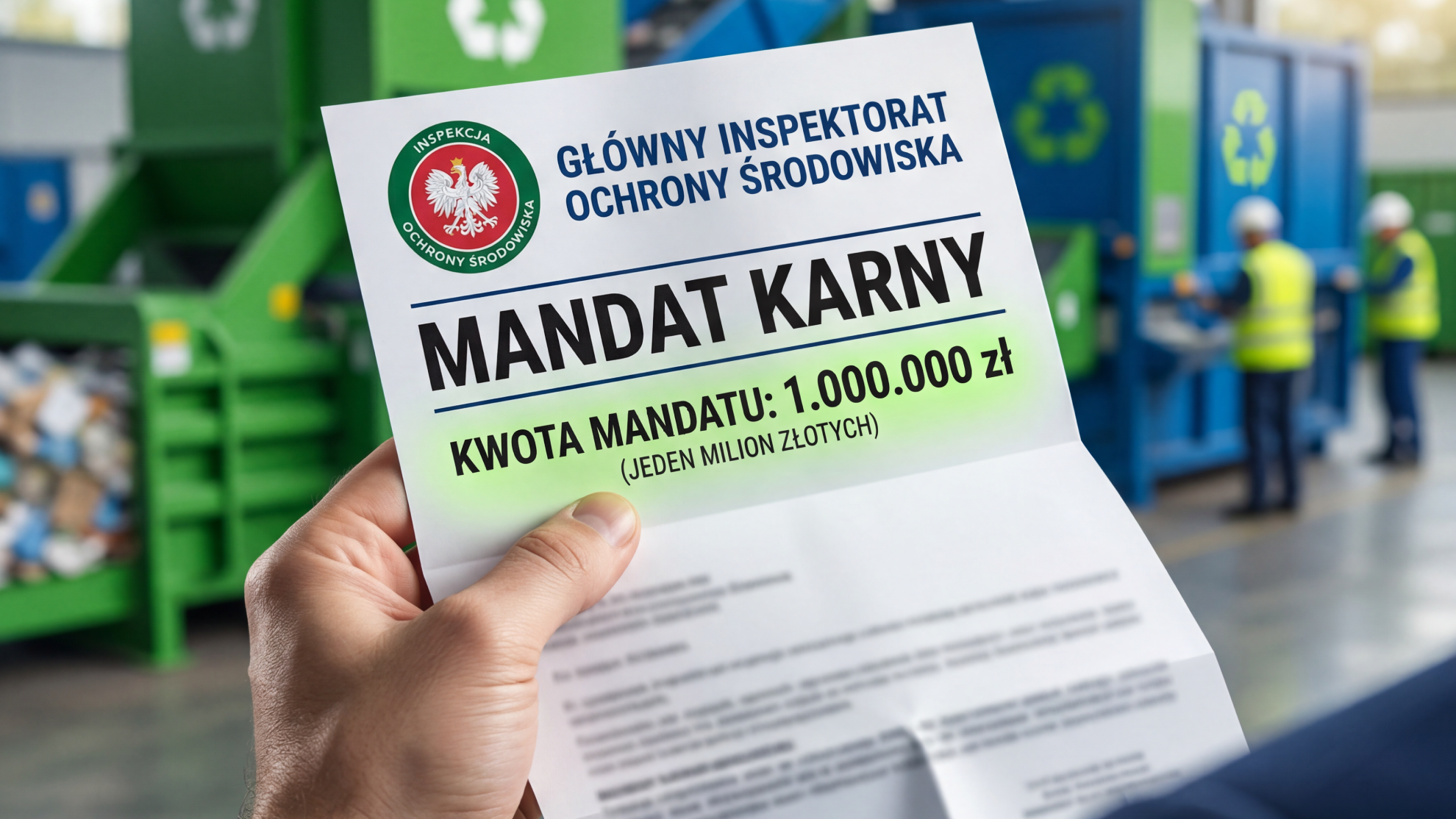
Failure to comply with the procedures laid down in the Waste Act is associated with severe legal consequences. The Environmental Protection Inspectorate has a wide range of disciplinary tools at its disposal, from fines to administrative fines. The latter can reach up to one million PLN in cases of gross negligence or illegal storage of hazardous substances.
In particular, the transfer of waste to entities that do not have the required permits is punishable. The law also provides for sanctions for non-entry in the BDO, errors in KPO documentation or failure to comply with reporting deadlines. In extreme cases, where there is significant environmental pollution, the case may end up in criminal proceedings.
Prevention and internal audits
Due to the risk of heavy fines, companies are increasingly opting for internal environmental audits. They allow early detection of irregularities in the recording or storage process. This allows the company to correct errors before a possible state audit.
The introduction of clear internal procedures on how to implement legal waste transfers increases operational security. Employees responsible for logistics should receive regular training on how to use the BDO system. Investing in knowledge is much cheaper than incurring costs resulting from administrative fines.
How to transfer waste legally? Procedures and good practices
The legal waste transfer process is based on three key pillars:
Each of these elements plays an important role in ensuring compliance and safety of the entire waste management process. The omission of any of them can result not only in formal errors, but also in real financial consequences - including heavy administrative fines.
On the other hand, a properly organised record-keeping system and cooperation with reliable partners translates into greater control over waste, more efficient operational handling and credibility in the eyes of contractors and inspection authorities.
In practice, this means one thing: the earlier you get these areas sorted out, the fewer risks and costly problems will arise in the future.
Author: Jakub Koszyński | Editorial: Pawel Makowski