
The transport of waste from outside the EU and DIWASS – what should you bear in mind before organising a shipment?
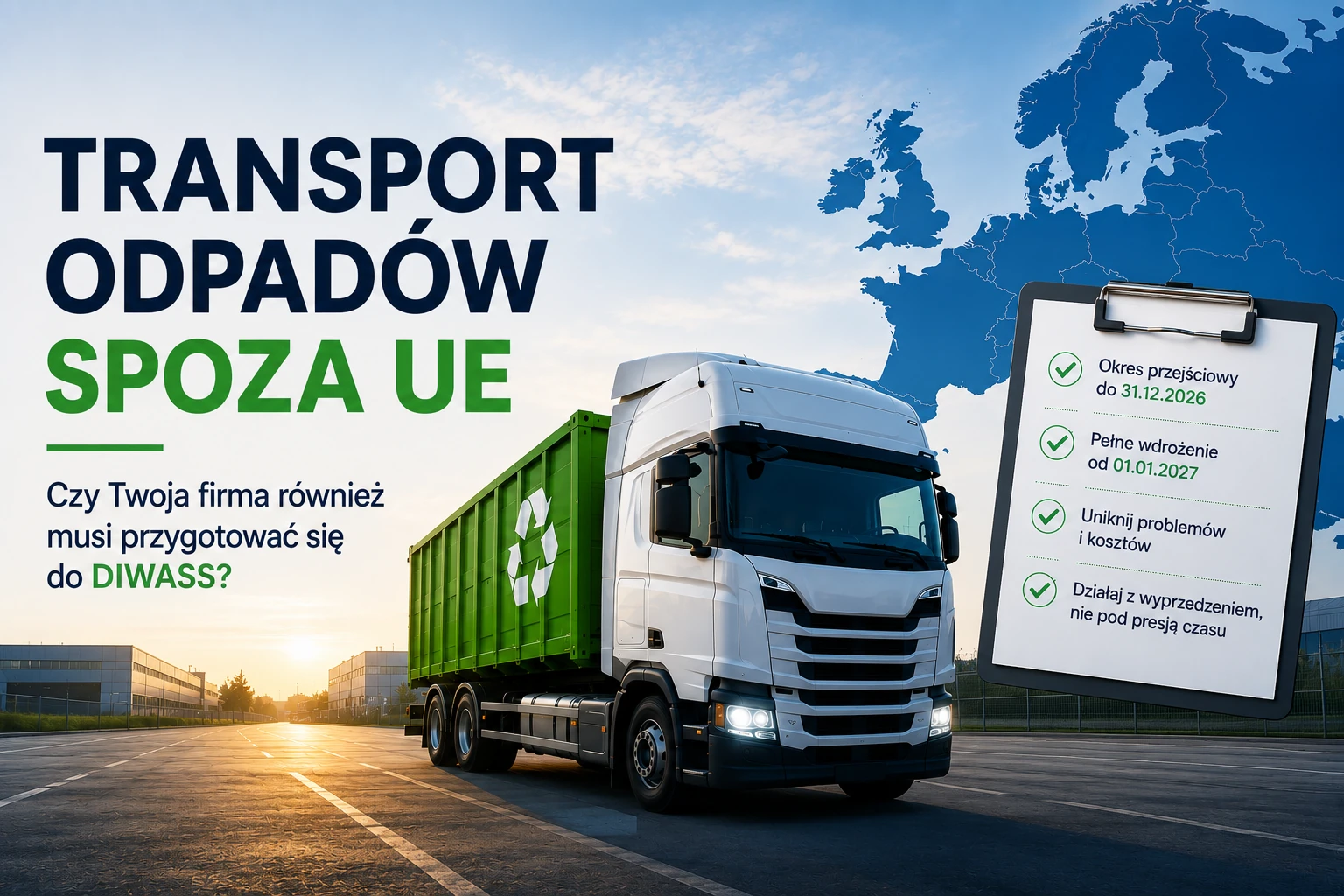
From 21 May, the shipment of waste from outside the EU has been taking place under a new legal framework. With the implementation of the DIWASS system, procedures relating to the cross-border shipment of waste (notification and shipment under Annex VII) have been (for the time being, partially) transferred to a digital environment. Although the focus is usually on the obligations of businesses within the European Union, companies from third countries should also prepare for the upcoming changes. If you are planning to transport waste from outside the EU to one of the Member States, it is worth checking today how the new measures might affect your business. This will help you avoid unnecessary surprises and make it easier to prepare your company for the next stages of DIWASS implementation.
Do you need help registering your business on the DIWASS platform?
Contact us and entrust the care of your business to professionals:
e.nadolna@ekologistyka24.pl , +48 881 045 376
j.blazewicz@ekologistyka24.pl , +48 500 867 153
Does DIWASS also apply to companies outside the European Union?
This is one of the first questions asked by businesses from outside the EU. The answer is: it may apply, so it is not worth assuming that the new regulations apply only to companies from Member States.
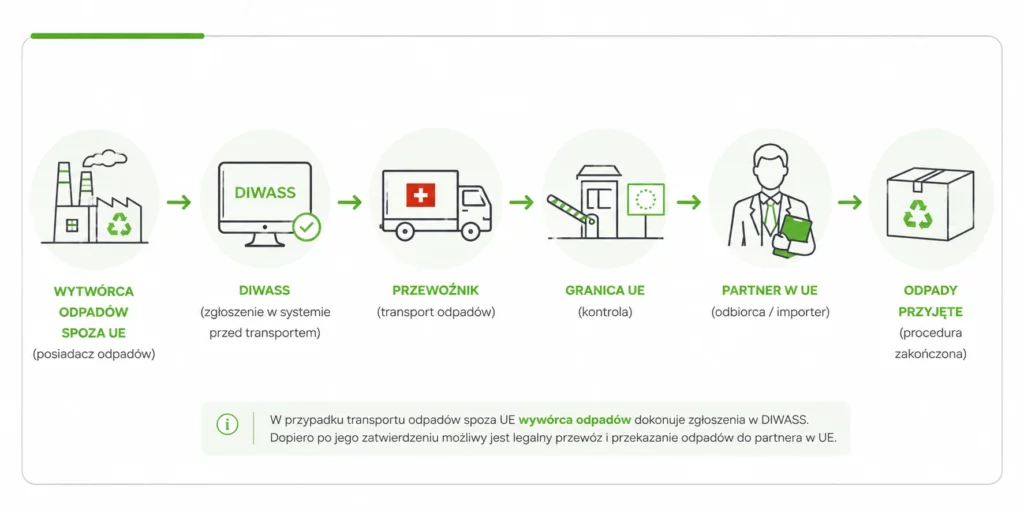
If you organise the transport of waste from outside the EU to EU member states, or if you work with EU partners on cross-border waste shipments, DIWASS may influence how the entire process is prepared and managed. This applies, amongst other things, to the exchange of documents, communication between those involved in the transport, and cooperation with the relevant authorities.
However, this does not mean that every party involved in the transport process will carry out the same tasks within the DIWASS system. The scope of responsibilities depends on the role of the entity in question and the type of waste shipment being carried out.
Good to know
Whether DIWASS will be relevant to your business is not determined solely by the country in which you operate. What matters most is whether, and in what capacity, you are involved in the cross-border shipment of waste covered by the regulations in force within the European Union.
In many cases, it is precisely during the process of working with EU partners that new requirements relating to the digitalisation of procedures arise.
Where should I start with the preparations?
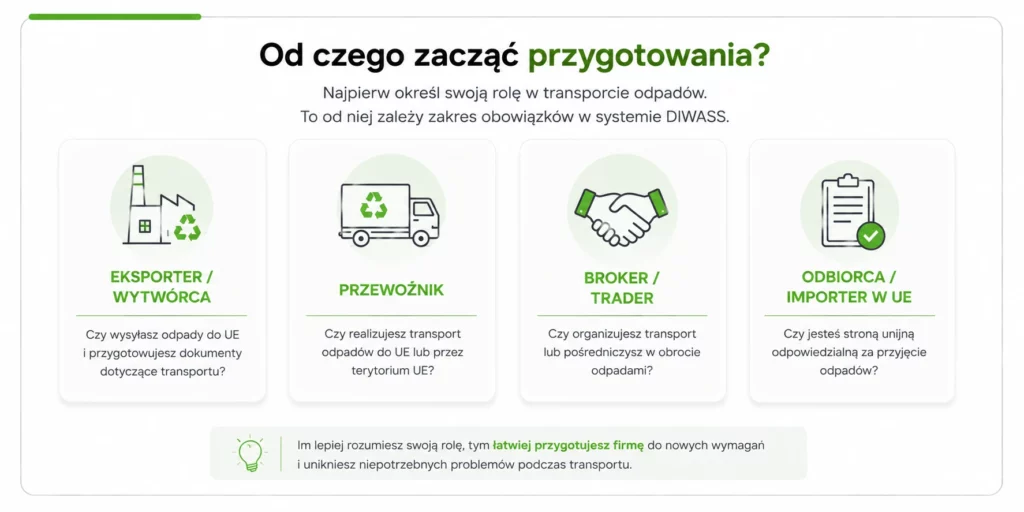
The best place to start is not by learning how to use the system. First, it is worth finding out what role your company plays in the overall waste transport process. It is this role that determines which obligations may apply in the future.
Ask yourself a few simple questions.
Do you export waste to the European Union?
If your company exports waste to Member States, it is worth keeping an eye on developments regarding DIWASS and checking how the requirements for documentation and cooperation with EU partners are changing.
Do you arrange transport yourself?
If you are responsible for organising transport, it is a good idea to review your current procedures now. This may make it easier for your company to adapt to new arrangements in the future.
Do you work with a customer or partner in the EU?
In many cases, preparing the documents requires close cooperation between all parties involved in the transport process. The sooner you agree on the division of responsibilities, the easier it will be to avoid misunderstandings.
Good practice
Don’t wait for the first order to be processed under the new rules. Use the coming months to streamline your procedures and decide who in your company will be responsible for matters relating to waste transport.
What challenges should we start preparing for today?
DIWASS is designed to facilitate the exchange of information between parties involved in cross-border waste shipments. At the same time, this means that companies will have to plan the entire process even more carefully and cooperate more effectively with their partners.
Documentation will become even more important
Incomplete or inconsistent information can cause unnecessary delays. It is therefore worth ensuring a transparent document workflow even before implementing new solutions.
Cooperation with partners will become even more important
The exporter, carrier, consignee and other parties involved in the process should clearly define their responsibilities. This will make it easier to organise the transport in accordance with the applicable procedures.
The changes will be introduced gradually
It is worth keeping an eye on the European Commission’s announcements on a regular basis and industry websites, so as to respond to new information in good time.
Good to know
Companies that start their preparations earlier will have more time to adapt their procedures and train their staff.
How can you best prepare for your first shipment of waste from outside the EU?
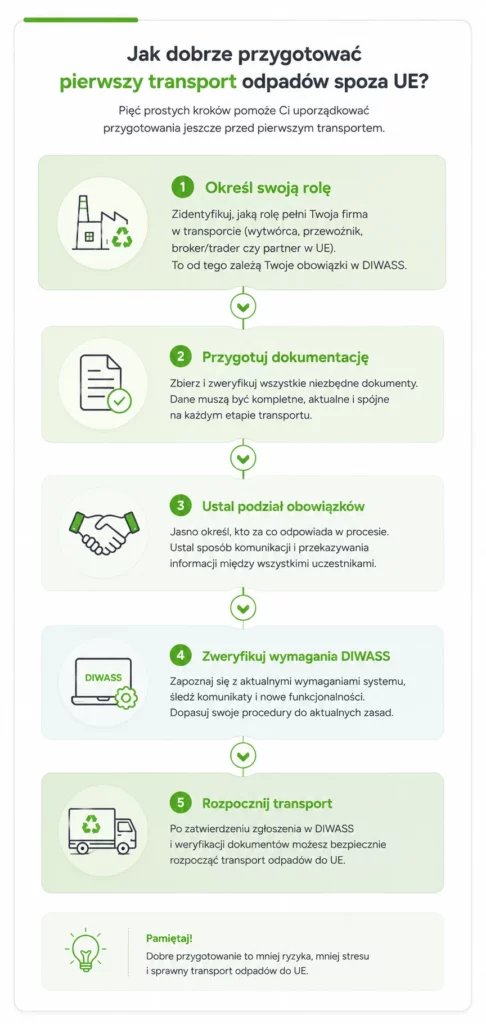
The first shipment carried out under the new rules should not be a trial run. The sooner you prepare your company, the lower the risk of delays and organisational problems.
Agree on the division of responsibilities
If several parties are involved in the transport process, each should be clear about their respective responsibilities. This applies both to the preparation of documents and to the exchange of information between all parties involved in the process.
Check that all the documents are in order
Even minor discrepancies between documents can delay the process. It is therefore advisable to check that all details are up to date and consistent before the shipment begins.
Keep up to date with announcements regarding DIWASS
The system will be rolled out in stages. It is therefore advisable to check regularly for new information published by the European Commission and the relevant authorities in the Member States.
Good practice
If you regularly transport waste from outside the EU, draw up an internal checklist. This will make it easier to plan and verify each subsequent consignment.
Is it worth waiting until 2027 to start preparing?
The fact that DIWASS will not be fully implemented until after the completion of transition period, this does not mean that it is a good idea to leave preparations until the last minute. On the contrary – now is a good time to calmly review your procedures and prepare your company for the upcoming changes. All the more so as many customers in the European Union require carriers to already be registered in the new system.
In practice, the biggest challenge is rarely the actual operation of the new system. It takes considerably more time to organise the documentation, define the division of responsibilities and adapt internal processes to the new rules of collaboration.
If your company regularly transports waste from outside the EU, preparing in advance will help you avoid working under time pressure. This will make it easier to implement new procedures, train staff and work with your EU partners to develop an efficient way of working.
Good to know
Today, January seems a long way off. However, every entrepreneur knows how quickly the second half of the year flies by. By the time the calendar shows November, it will already be too late to think, „I’ll still have time”. If you want to get your business ready without rushing, start when you feel comfortable doing so. In other words, now.