
How to enter the waste transport business: company requirements and preparation

Starting a business in the waste transport sector requires precise compliance with strict legal and operational standards. In the following study, we analyse the formal path and the technical aspects that determine legal operation in this market. You will learn what steps need to be taken in order to successfully register an entity and eliminate the risk of severe financial sanctions.
Have doubts about documentation? Don't want to make mistakes with your registrations?
Contact us and entrust the care of your business to professionals:
e.nadolna@ekologistyka24.pl , +48 881 045 376
j.blazewicz@ekologistyka24.pl , +48 500 867 153
Why invest in waste transport?
The waste management sector shows great resilience to economic fluctuations. Every production, trade or service company generates waste, which requires professional collection and disposal. The growing environmental awareness of society further forces companies to use certified hauliers. Therefore, a modern haulage company in this niche can count on standing orders and long-term contracts.
In addition, the European Union is constantly tightening recycling and recovery standards. This phenomenon is generating demand for increasingly specialised transport of different fractions of materials. Entrepreneurs able to adapt their fleet to the stringent standards gain a competitive advantage in the local and national market. Investment in this industry is therefore a promising business move.
How to start transporting waste - the first formal steps

Starting a business in this sector requires first and foremost obtain the appropriate entry in the BDO register. This is the Database on Products and Packaging and Waste Management, managed by the Marshal's Office. Without an active registration number, a company cannot legally transport a single tonne of cargo classified as waste. The process requires an electronic application through the government portal.
The entrepreneur must also hold a general licence to carry out national or international road haulage. Only the combination of transport authorisations with an entry in the BDO register paves the way for customer service. It is worth remembering that transporting waste without the required permits carries an administrative fine of up to one million zlotys. Therefore, scrupulous completion of formalities is the absolute foundation of a safe business.
BDO registration and registration number
The BDO system is used to fully monitor the flow of waste throughout the country. Every transporter must apply for an entry in Section VII of this register. Registration is only done electronically using a trusted profile or qualified signature. When filling in the form, the scope of activity and the types of materials transported must be specified in detail.
The Marshal's Office assigns a unique nine-digit registration number to the company upon successful application. The entrepreneur is required to include this number on all company documents, including invoices and waste transfer cards. An annual registration fee must also be paid to maintain active status in the system. Failure to pay on time may result in the company being removed from the register and its operational capabilities being halted.
Selection of appropriate waste codes
A key element of the BDO entry application is to indicate the specific waste codes the company intends to transport. The waste catalogue contains hundreds of items divided into groups according to the source of their generation. For example, construction waste has different designations than waste from the food industry or chemicals. The entrepreneur needs to anticipate which orders it will be carrying out in the near future.
Too narrow a list of codes will limit the company's operational possibilities and force the owner to update the entry frequently. On the other hand, declaring all possible codes may arouse unnecessary interest of control authorities. The optimum solution is to select the waste groups that best fit the vehicle fleet. Precise matching of the codes allows for the efficient generation of Electronic Waste Transfer Cards during daily operations.
Vehicle fleet labelling requirements
Vehicles designed to transport waste must have visible and legible signage. The regulations require a white plate on the vehicle measuring 400 mm by 300 mm with black lettering „WASTE”. This plate should be located on the front of the vehicle in such a way that it can be easily identified by the control services. If the transport is carried out in a combination of vehicles, the marking must appear on the first car.
Correct signage informs other road users and inspection authorities of the nature of the load being transported. In the case of cross-border transport, the regulations may require a board with the letter „A” (from the German word Abfall). Failure to comply with this obligation or the use of incorrectly sized plates constitutes a breach of road transport legislation. The company must therefore ensure that every vehicle in its fleet is equipped in a durable and compliant manner.
Rules on the transport of hazardous waste
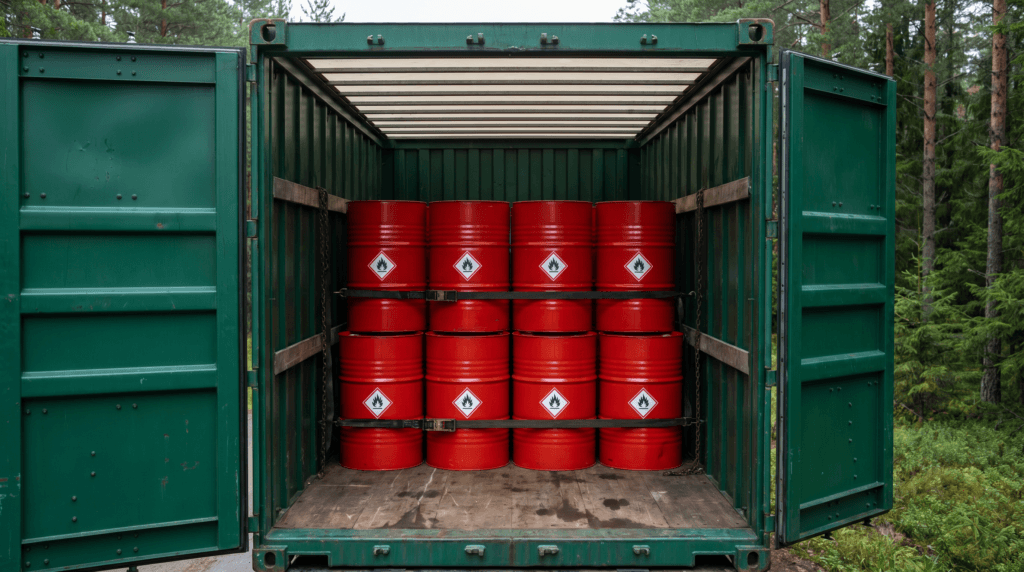
The transport of hazardous substances imposes additional, very strict legal restrictions on the company. In this case, the entrepreneur must comply with the provisions of the ADR agreement on the international carriage of dangerous goods by road. This requires specialised vehicles equipped with appropriate safety systems and fire extinguishing agents. The drivers, in turn, must undergo additional training and obtain ADR certificates.
In addition, a company transporting hazardous waste is required to appoint a safety advisor (DGSA). This advisor oversees logistics processes and prepares annual reports for the road transport inspection authorities. The transport of this type of material involves higher rates for the service, but also generates greater liability. The entrepreneur must therefore take out extended insurance policies covering environmental damage.
Preparation of technical facilities and transport base
A transport company must have a suitable operating base adapted to the number and type of vehicles. This space is used not only for parking the cars, but often also for their basic maintenance. If the entrepreneur plans to store waste temporarily on the base, he must obtain an additional waste collection permit. This requires compliance with strict fire safety standards and protection of the ground against leaks.
The choice of fleet should result directly from an analysis of the market and the needs of future customers. Hook-and-loop containers are great for the construction industry, while refuse trucks are essential for municipalities. It is also worth investing in GPS monitoring systems, which facilitate route management and documentation of working time. State-of-the-art technical facilities increase the company's credibility in the eyes of large contractors and environmental auditors.
Documentation in the daily work of a transport company

Each waste shipment must be confirmed in the electronic system before the physical start of the journey. The waste transporter generates a Waste Transfer Note (KPO) and the transporter must accept it in the BDO system. The driver should carry a confirmation of the generation of the card, which he can show during a roadside check. This document contains information on the type of waste, its weight and the details of the consignor and consignee.
Once the load has been delivered to its destination, the consignee confirms that the waste has been taken over in the system. Only then is the transport process considered formally completed and correctly recorded. Maintaining reliable documentation in real time protects the company from accusations of illegal storage of materials. In addition, the BDO system automatically totals the weights of the loads transported, which facilitates the compilation of the mandatory annual reports.
The most common procedural errors and how to avoid them
New entrepreneurs often forget to update their BDO register details in a timely manner following a change of fleet or registered office. Any significant change in the company's structure requires the notification of an amendment to the Marshal's Office within 30 days. Another mistake is transporting waste under the wrong code due to the driver's failure to verify the load. Such oversights lead to discrepancies in records and can result in criminal sanctions.
A common problem is also the lack of adequate load securing, resulting in dust or leakage during transport. The company needs to equip vehicles with efficient tarpaulins, nets and sealed containers dedicated to specific fractions. Regular training of employees in safety procedures and the use of the BDO system minimises the risk of mistakes. Professionalism in detail builds a reputation as a reliable partner in the waste management industry.
Strategic foundation for safety in waste transport
Building a profitable business in this sector requires absolute adherence to record-keeping procedures and maintaining a high technical standard of the fleet. Reliable waste code management and digital process control provide an effective barrier against legal risks while building a sustainable competitive advantage. Professionalisation in the area of environmental logistics is now a prerequisite for operational stability and the trust of key contractors.
Author: Jakub Koszyński Editorial: Jakub Koszyński