
Monitoring waste transport – the most common errors in documentation that can prove costly
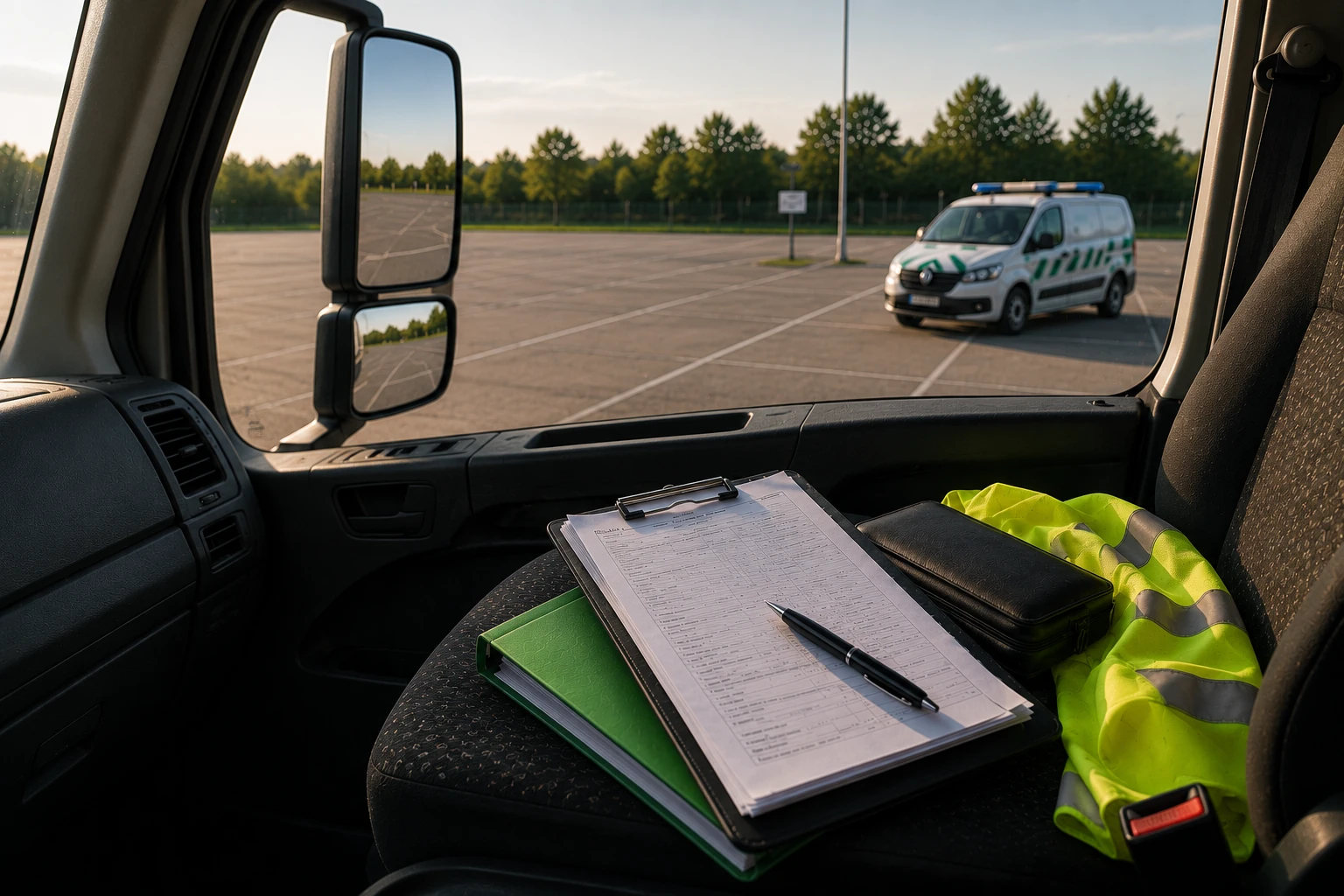
For many hauliers, waste transport inspections are one of the most stressful moments during a job. It takes just a few minutes for inspectors to check the documentation and assess whether the transport is being carried out in accordance with the regulations. Importantly, irregularities do not always concern the load itself. Very often, problems stem from errors in the paperwork or a lack of the required permits. This is confirmed by an inspection carried out in the Netherlands, during which several hauliers discovered that even seemingly minor breaches can result in hefty fines. Let’s take a look at what happened during this operation and what lessons waste transport companies should learn from it.
Check the documentation before the inspector does
You have no control over when your vehicle will be stopped for a check.
However, you do have a say in whether the documentation will be complete.
Before the planned transport, we will check, amongst other things:
✔ completeness of the documentation,
✔ required permits,
✔ data consistency,
✔ obligations arising from the transport route.
Contact with us
e.nadolna@ekologistyka24.pl , +48 881 045 376
j.blazewicz@ekologistyka24.pl , +48 500 867 153
A routine inspection of waste transport resulted in fines
In May 2026, the Dutch authorities carried out a joint inspection of vehicles transporting waste in the Twente region. The operation involved the Police, the Inspectie Leefomgeving en Transport (the Dutch equivalent of the ITD) and the Omgevingsdienst Twente. A total of 17 vehicles transporting waste were inspected.
According to the website Online Transport, inspectors They checked, first and foremost, the transport documents, the compliance of the documents with the cargo being transported, and the required permits. The results of the inspections demonstrate just how important it is to prepare the documents correctly.
As a result of the measures carried out Seven drivers were issued with fines. The reason was not any spectacular cases of illegal waste shipments, but procedural irregularities detected during the inspection. This shows that even seemingly minor irregularities can result in severe financial consequences.
What errors did the inspectors find?
An inspection carried out in the Netherlands shows that serious breaches of the regulations do not always result in a fine. Often, seemingly minor irregularities – which quickly come to light during an inspection – are sufficient. During the operation in question, the inspectors found, amongst other things:
Each of these problems may have different causes. Sometimes it stems from an oversight, sometimes from a misinterpretation of the regulations, and sometimes from a lack of knowledge of the requirements in force in the country through which the transport takes place. Regardless of the cause, it is the carrier who must demonstrate that they are carrying out the transport in accordance with the applicable regulations.
Why is the documentation checked first?
During an inspection, the inspector is unable to verify the entire transport organisation process within a few minutes. However, they can very quickly assess whether the documents presented confirm that the transport is lawful.
On this basis, it checks, amongst other things:
If discrepancies arise at this stage, the inspection usually becomes much more thorough. This is precisely why it is so important to prepare the documentation properly before transport begins.
Waste transport inspections – is your company ready for them?
Most business owners assume that, since they have been transporting waste for years and have not encountered any problems during inspections so far, their documentation is in order. Unfortunately, this assumption may prove to be incorrect.
The regulations governing the transport of waste are constantly changing. Furthermore, the scope of obligations depends, amongst other things, on the type of waste being transported, the country of dispatch, the transit countries and the country of destination. This means that the documentation prepared for one consignment will not always be correct for the next.
It is therefore worth making sure that all the requirements have been met before you set off.
In practice, this means that it is necessary to check, amongst other things:
These are just some of the elements that the authorities may check during an inspection. The more complex the transport operation, the more important it is to check all the documentation in advance.
How can you avoid similar problems?
The best time to detect errors is before transport begins, rather than during a roadside check. At that stage, most irregularities can still be rectified without the risk of the vehicle being detained, the delivery being delayed or a fine being imposed.
That is why an increasing number of companies are opting to carry out an early review of the documentation and obligations relating to a planned consignment. Such a review makes it possible to check whether all the formalities have been completed and whether the consignment meets the requirements set out in the applicable regulations.
If you transport waste in Poland or abroad and wish to minimise the risk of problems during inspections, we can review your planned transport before the vehicle sets off. We will check the documentation, highlight any potential risks and advise you on which aspects need to be supplemented or corrected.
Remember
Monitoring waste transport need not be a problem. In practice, most of the irregularities detected by inspectors can be identified in advance – provided that the documentation is checked before the journey begins.