
DIWASS malfunction before loading – what should you do?

The full digitisation of waste shipment procedures has one structural weakness: it makes the legality of an operation dependent on the system functioning properly. A DIWASS failure a few hours before a scheduled loading therefore presents the organiser of the shipment with a specific operational dilemma: should they suspend the transport or apply an alternative procedure? Below, we outline the failure scenarios and the procedures to follow in each case.
Do you need help registering your business on the DIWASS platform?
Contact us and entrust the care of your business to professionals:
e.nadolna@ekologistyka24.pl , +48 881 045 376
j.blazewicz@ekologistyka24.pl , +48 500 867 153
Failure scenarios – not every outage means the same thing
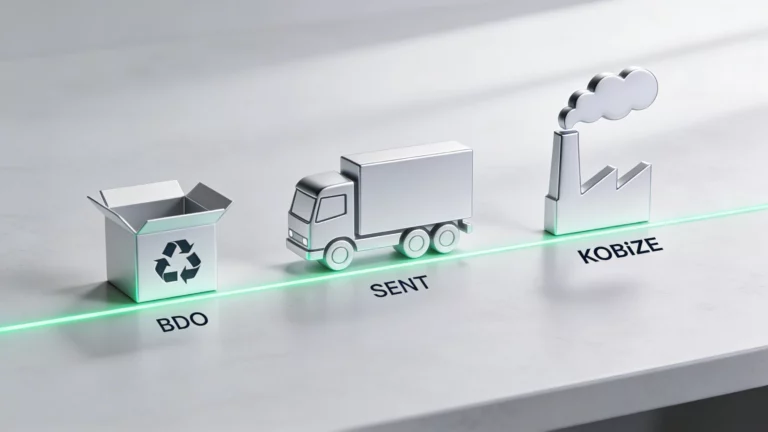
From the perspective of legal liability, it is crucial to determine, Who is to blame for the problem?. Experience from other compulsory schemes (SENT, KSeF) show that emergency procedures are of an exceptional nature and do not cover technical problems for which the business is responsible. In practice, four scenarios can be identified:

Emergency procedures – a step-by-step guide
Step 1: Verify and document the nature of the fault
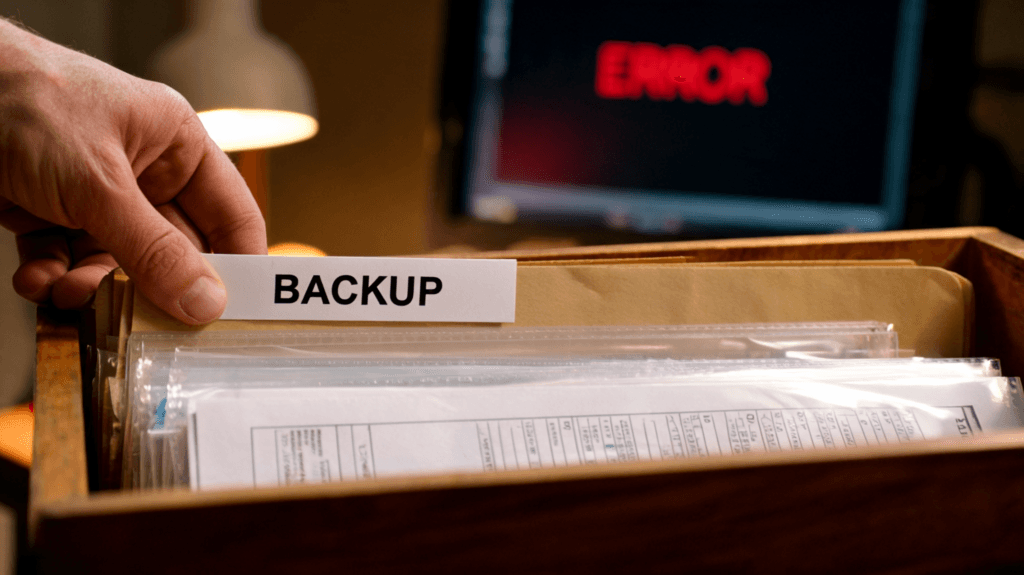
Before deciding on a transport solution, establish whether the unavailability is system-wide. Check official announcements (the GIOŚ website, Traces NT status) and compile your own documentation. Compile screenshots of the error message, the times of login attempts, and correspondence with the helpdesk. In the event of any proceedings, it will be up to the business to demonstrate that it exercised due diligence.
Step 2: Do not commence transport without the necessary documentation
If the notification was not successfully submitted prior to the system failure, loading and departure constitute a movement without the required documentation. This is technically unlawful, regardless of the reason. A safer option is to postpone loading until the system is restored. Alternative measures may also be used if the authority permits them in a particular case.
Step 3: Apply the alternative measures provided for in the regulations
Regulation (EU) 2024/1157 and Implementing Regulation (EU) 2025/1290, which govern the operation of the system, provide a framework for action in the event of digital infrastructure unavailability. During the transitional period (until 31 December 2026), paper-based documentation remains an additional safeguard for the notification procedure – the documents in Annex VII continue to be used in their current form. Once the system is restored, data submitted via alternative means must be entered into DIWASS without delay.
Step 4: Inform the other participants in the relocation
The consignee, the carrier and the competent authorities should be informed of any changes to the timetable or the use of an alternative procedure. In a system where a mistake by a single participant can jeopardise the entire operation, communication along the supply chain is a matter of risk management, not mere courtesy.
FAQ – frequently asked questions about the DIWASS system failure

Check whether the problem occurs on different devices and internet connections, check the announcements on the GIOŚ and European Commission websites, and contact the helpdesk. The absence of an official announcement regarding an outage usually indicates a local problem.
No, if the notification has not been successfully submitted. The fact that the system is unavailable does not justify moving goods without the required documentation – however, it may constitute a mitigating circumstance in proceedings.
Under the notification procedure (Annex VII, green list), paper documentation will continue to be used in parallel until 31 December 2026. In notification procedures, the digital requirement will apply from 21 May 2026, and paper documentation cannot replace a notification submitted via the system.
Any transport bookings made before the system failure remain valid. However, the driver should have a complete set of documents available offline – either printouts or copies saved locally – in case of an inspection where there is no access to the system.
A system failure cannot be a failure of procedures
The unavailability of DIWASS is an event that will, sooner or later, affect every participant in cross-border waste shipments. Experience with SENT and KSeF leaves no room for doubt on this point. There is a difference between a company that loses a loading day and one that loses its case in proceedings. It all comes down to preparation: a written contingency procedure, the habit of documenting downtime, and transport documentation available offline. The system may stop working. A business’s procedures, however, should not.
Author: Jakub Koszyński | Editorial: Pawel Makowski