
KOBiZE report - who has to submit it?
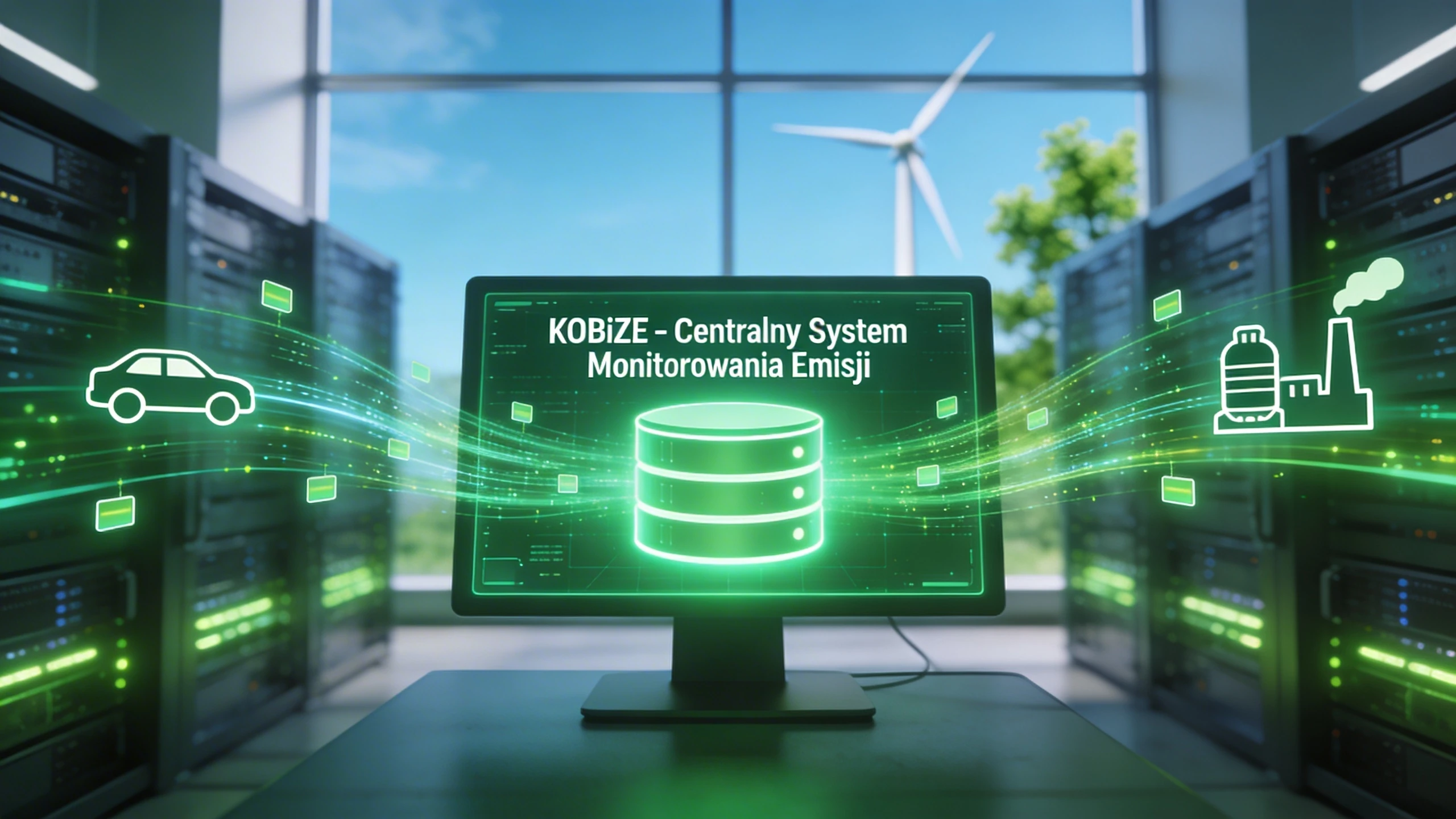
The National Balancing and Emissions Management Centre (KOBiZE) is the central body monitoring the impact of the Polish economy on the atmosphere, to which businesses have a statutory obligation to report emissions of greenhouse gases and other substances. This system collects data on specific sources of pollution, which allows the state to plan climate policy, implement international agreements and verify the reliability of companies, making an understanding of these mechanisms crucial to business management.
Need help preparing your KOBiZE report?
We will do it for you comprehensively. Send us a message or give us a call and we'll take care of everything:
j.blazewicz@ekologistyka24.pl , +48 500 867 153
Legal basis and origins of the KOBiZE database
The functioning of the NOBiZE database is based on the provisions of the Act of 17 July 2009. This document introduced the system for managing emissions of greenhouse gases and other substances into the Polish legal order. Therefore National Balancing and Emission Management Centre has been given the competence to maintain the register and verify the reports submitted. The legal framework requires environmental users to report annually according to clearly defined guidelines.
Objectives of reporting to the National Centre
The main objective of reporting is to create a reliable and complete emissions balance for the entire country. The state collects data from thousands of entities in order to monitor precisely who is putting substances into the atmosphere and in what quantity.
It is worth noting that the database also makes it easier for businesses to monitor their own environmental impact. As the system calculates emissions based on the fuel consumed, companies gain insight into their energy efficiency.
Who is required to submit an annual report?

The obligation to report to the NOBiZE applies to any entity using the environment whose activities result in greenhouse gas emissions. In practice, this means that the legislation covers not only industrial plants, but also small service companies. As the law does not provide for minimum emission thresholds exempting from this obligation, any recorded activity requires records. Thus, even a company with a single company car must register in the National Base system.
It is worth noting that the definition of an entity using the environment is very broad in Polish law. Therefore, it includes entrepreneurs, persons conducting manufacturing activities in agriculture and organisational units that are not entrepreneurs. Hospitals, schools, offices and foundations, insofar as they operate equipment that emits substances, are therefore subject to this obligation.
Catalogue of industries specifically covered by the scheme
| TYPE OF ACTIVITY | EXAMPLES OF PROCESSES GENERATING EMISSIONS | TYPE OF ENTITY |
| Transport services | Combustion of fuels in vehicle and machinery engines | Transport companies, courier services |
| Production and crafts | Welding, painting, varnishing, gluing | Workshops, factories, carpentries |
| Thermal management | Operation of gas, oil and coal-fired boilers | Residential communities, office buildings |
| Construction services | Operation of generators, excavators, combustion heaters | Building and road construction companies |
| Intensive agriculture | Poultry production, grain drying, tractor operation | Farms, dryers |
Lack of knowledge of ownership of an emission source does not absolve legal responsibility. The entrepreneur should regularly audit his technical resources against environmental requirements.
Classification of emission sources in the report structure
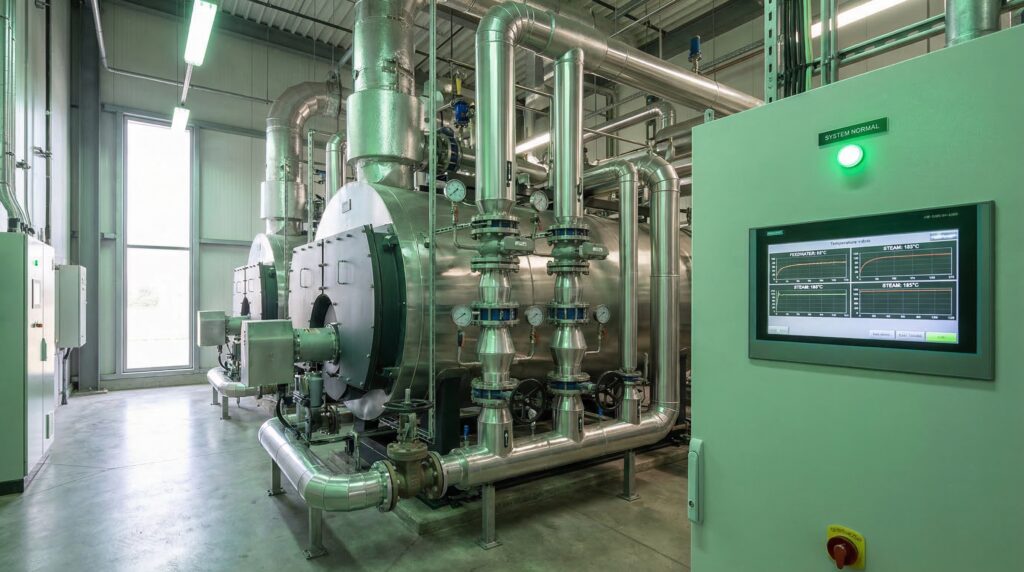
The system requires the division of sources into installations and equipment that is not an installation. As each of these categories has different technical requirements, the correct classification is crucial for the correctness of the report. Accordingly, an installation is a stationary technical device that can cause emissions in an organised manner. Thus, heating boilers of a certain capacity or paint lines always go into this section of the report.
Due to the mobile nature of these sources, the system allows them to be reported globally for the entire entity or with attribution to specific sites. Therefore, the operator must consider every aspect of the physical release of substances into the air.
Why do WIOŚ inspections start with the KOBiZE database
The provincial environmental inspectorate regards the system as an essential tool for planning inspections. As the database is available online for officials, they can check the status of a company before visiting the site. The absence of a report for a given year is therefore the first sign of non-compliance with environmental regulations, which may involve financial sanctions. Thus, inspectors often select the entities to be checked precisely on the basis of deficiencies in the National Database. Therefore, the reliability of the data in the NOBiZE directly affects the course and outcome of an environmental inspection.
Data verification mechanisms by control bodies
The WIOŚ inspectors use the method of comparing data from different administrative systems. They collate the report data with the lists of environmental charges that entrepreneurs send to the Marshal's Office. Any difference in the number of litres of fuel burned can become a reason to initiate an investigation.
Many companies omit air conditioners or chillers from their records, which, if they are physically found on site by inspectors, is considered a critical error. Consequently, inspectors may request purchase invoices and service records for the equipment. A successful inspection is usually based on a confrontation between the accounting records and the declarations made in the system.
Most common errors in KOBiZE reports
One of the most common mistakes is the incomplete inventory of a company's emission sources. Entrepreneurs often report only the main processes, omitting the vehicle fleet or office air conditioning. As the system requires all substances to be included, the lack of description of auxiliary processes makes the report unreliable.
Most invoices give values in litres or cubic metres, forcing the trader to use appropriate density conversion factors. The system absolutely requires the reporting of fuel consumption in megagrams, i.e. tonnes. A simple transcription of the values from the purchase documents then leads to drastic misrepresentations in the volume of emissions.
Typical methodological mistakes and their consequences
| TYPE OF ERROR | CAUSE OF FORMATION | EFFECT ON THE ENTITY |
| Incorrect mass units | Entering litres instead of megagrams (Mg) | Drastic overstatement of emissions and fees |
| Omission of F-gases | No record of refrigerant loss in air conditioning | Allegation of concealment of information |
| Aggregation of sources | Combining several boilers into one emission source | Incorrect classification of the installation |
| Data copying | Duplication of previous year's report | Non-compliance with the facts |
The above summary shows that most errors are due to oversights or lack of technical knowledge. As the system allows the report to be corrected, it is worth regularly checking the correctness of the data entered. However, it should be noted that numerous corrections may also attract the attention of officials. The process of preparing the report needs to be carefully planned and based on sound accounting evidence.
KOBiZE and environmental charges
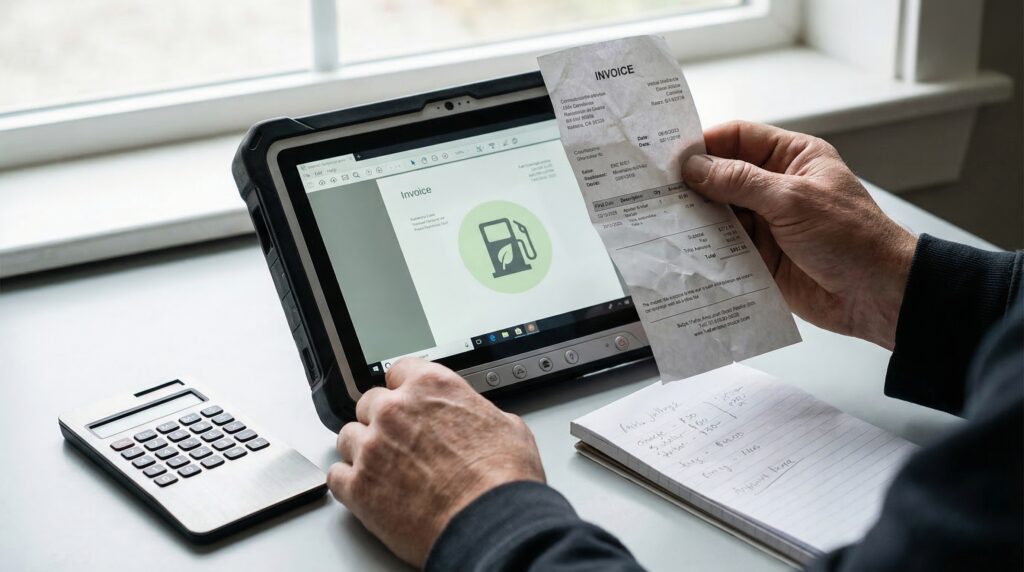
The report to the National Base and the report to the marshal's office are two separate but related obligations. As both documents are based on the same fuel consumption data, they must be fully consistent with each other. Consequently, any discrepancies between the systems are immediately picked up by the control algorithms. Therefore, the entrepreneur should treat the KOBiZE report as the foundation for calculating the environmental charges due.
It is worth noting that the report is always submitted, regardless of the volume of emissions. In contrast, the obligation to pay the marshal arises over 800 PLN for the year in question. As many small companies do not exceed this threshold, they often mistakenly assume that no reporting is required. In fact, exemption from the fee does not mean exemption from reporting to the National Database.
The role of the BDO database in the context of emissions reporting
Database on Products and Packaging and Waste Management (BDO) provides another source of information for the WIOŚ inspectors. As waste and emissions often arise from the same technological processes, the data in both systems should be logically linked. A sudden increase in the amount of waste generated while there are no changes in the report may trigger an inspection. A professional approach to environmental protection forces the company to constantly monitor both databases. Consequently, digital consistency between administrative platforms is crucial for the company's legal security.
Practical steps: How to prepare the report correctly?
Effective preparation for reporting should start with getting your accounting records in order. As fuel, gas and electricity invoices are the basis for calculations, they must be easily accessible and complete. It is worth creating an internal register of utility consumption that is kept up-to-date throughout the year.
Traders should also regularly check the consistency of their equipment's technical data. As the replacement of a boiler or car changes the emission parameters, the system must be updated with the new information. Consequently, any change in the company's infrastructure should be reflected in the National Database. It is worth emphasising that the use of specialists avoids methodological and technical pitfalls.
Author: Jakub Koszyński | Editorial: Pawel Makowski