
Withdrawal of waste shipments as a way of avoiding penalties

The management of waste logistics requires operational precision and regulatory proficiency, especially in the face of critical errors forcing the procedure of withdrawal of a shipment. When non-conformity of goods with documentation is detected, an immediate and correct response is essential to avoid severe financial penalties and administrative sanctions. This article examines the process of order cancellation and cargo reversal, offering the expert knowledge needed to efficiently manage crisis situations. With this guidance, companies can effectively minimise legal risks and secure the continuity of their logistics processes.
Need help with waste transport?
FTL loads and top-ups on routes throughout Europe. Don't wait, write or call:
a.zabron@innovationtrading.eu , +48 881 039 312
dispo@innovationtrading.eu , +48 519 516 869
Importance of correct withdrawal of waste shipments
Proper implementation of the transport revocation procedure protects all parties involved in the supply chain. Errors in the transport of waste can lead to accusations of illegal management of these materials, resulting in heavy fines. Therefore, any decision to withhold a shipment must be based on a thorough documentary analysis and visual inspection of the cargo. An entrepreneur who is able to efficiently withdraw a shipment builds an image of a professional and responsible entity.
In addition, a rapid response to errors reduces the costs associated with possible vehicle downtime or the need to dispose of the wrong goods. It is worth emphasising that environmental inspectors take a rigorous approach to any shortcomings in the BDO system. Correctly reversing waste shipments therefore becomes a key element of any logistics company's risk management strategy. Efficient internal procedures make it possible to instantly eliminate risks even before the vehicle takes to the public road.
Documentation irregularities as reason for cancellation

Documentation errors are the most common reason for stopping waste deliveries. It happens that the vehicle registration numbers on the waste transfer note do not correspond to reality (because there was a typing error or the means of transport was changed to another at the last minute). Please note that the error may relate not only to the tractor, but also to the semi-trailer or trailer - the in the event of a roadside check The absence of any of the numbers on the KPO is treated as transport without the required documentation. Another common situation is an incorrect indication of the place of delivery or a mistake in the consignee's details. Such failures make the transport illegal under the applicable legislation. As a consequence, the haulier should not take up the load until the data has been fully corrected in the ICT system.
In addition, the lack of valid permits on the part of the transporter or consignee forces the order to be cancelled immediately. The transporter must have a current registration in the BDO register for the transport of specific waste codes. If, during verification, it turns out that the company does not have the relevant authorisations, cancellation of the order is the only legal solution. It is worth noting that any attempt to circumvent these requirements exposes the company to fines of up to one million PLN. Therefore, a reliable check of documentation prior to loading is the absolute foundation of safe logistics.
Non-conformity of the composition of the goods with the declaration
The detection of a different type of waste than that declared in the KPO documents requires an immediate halt to the transport process. Often during loading it turns out that the goods contain admixtures of hazardous substances, which the shipper did not include in the order. This situation poses a risk not only to the environment, but also to the safety of the driver and other road users. As a result, a simple KPO correction may not suffice and the haulier has every right to refuse to accept the goods until the shipper has clarified the discrepancy.
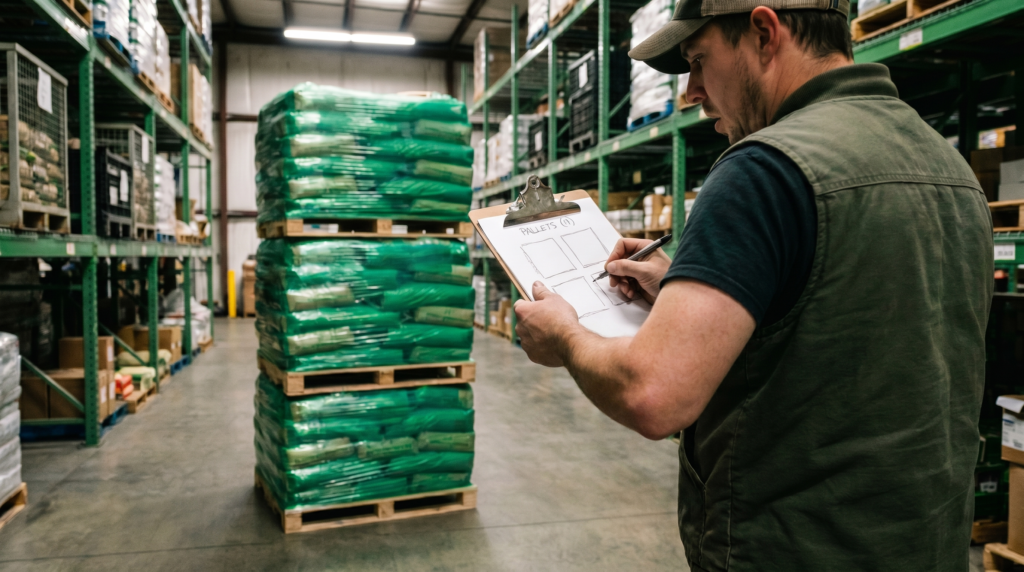
In addition, incompatible waste codes prevent the recipient from legally accepting the load at their facility. Waste treatment facilities have strict limits and permits for specific commodity groups. Accepting material that does not comply with the integrated permit risks revoking environmental decisions for the company concerned. Therefore, early detection of differences in the chemical or morphological composition of the waste protects the recipient from serious legal problems. A meticulous visual inspection of the goods before closing the trailer is therefore an essential verification step.
Shipper's responsibility for cargo preparation
The shipper of the waste bears the main responsibility for the correct classification of the goods and the preparation of the necessary documents. He must ensure that the waste transfer note generated in the BDO system reflects the actual condition of the cargo. If the shipper provides false information, he or she bears the full financial consequences resulting from delays and the need to return the shipment. Proper training of warehouse and office staff can reduce such errors to a minimum.
In addition, the shipper is responsible for the safe packaging and labelling of waste, especially of a hazardous nature. If leakage or damage to packaging is discovered even before departure, the transport must be stopped immediately. The shipper must then take corrective action to eliminate the risk of substances leaking into the environment. It is worth noting that the costs of any reloading or securing the goods in such a situation are charged to the shipper. A professional approach to the preparation of the shipment significantly improves the entire logistics process.
Role and responsibilities of the carrier in the return process

The haulier has a control function and is the last link to verify the goods before they go out on public roads. It is his responsibility to check that the data in the BDO system corresponds to the transport documents and the licence plates of the convoy. If the driver notices any discrepancies, he should refrain from setting off from the loading site. In this case, the haulier must immediately inform his dispatcher and the shipper's representative of the problems detected.
He or she must then ensure that any reversal of the waste transport is recorded in an appropriate manner. If the goods have already been loaded but the vehicle has not left the premises, the unloading must take place. The carrier has the right to claim compensation for the substitution of the vehicle and the waiting time if the shipper is at fault. It is crucial to keep full records of correspondence, which will serve as evidence in the event of financial disputes. Precise action on the part of the carrier prevents the company from being drawn into illegal transport procedures.
Obligations of the consignee when refusing to accept waste
The consignee is obliged to verify the cargo immediately upon its arrival at the destination. If during weighing or visual inspection he finds discrepancies with the KPO documentation, must refuse to accept the goods. The option to reject the waste must then be ticked in the BDO system, together with a specific reason for this decision. Consequently, the transport must be diverted back to the consignor or to another designated authorised facility.
It is worth remembering that a consignee cannot hold waste on its premises that it cannot legally process. It must work closely with the haulier to enable him to depart safely with the unclaimed cargo. In addition, the consignee should draw up a discrepancy report that precisely describes the reasons for sending back the shipment. Doing so protects the company's interests and avoids accusations of improper storage of waste without a permit.
Step-by-step procedure for reversing a transport
The implementation of the scheme of conduct is essential to maintain operational discipline and to ensure full transparency before the control authorities. Any change of status must be recorded in the electronic system in real time, allowing the Road Transport Inspectorate to immediately verify the legality of the cargo.
1) The correct course of action includes the following steps:
- Identifying the error and securing the load: Immediately stop the vehicle in a safe place, while maintaining the highest environmental standards to eliminate the risk of uncontrolled leakage.
- Verify status with BDO and contact the issuer: Immediate notification to the KPO card issuer for action in the ICT system. It is crucial that the error is corrected before further logistical action is taken.
- Generation of new documentation: If the transport is to continue after corrections, it is necessary to issue a new, correct KPO card before starting the route again.
2) Cancellation or formal rejection of transport:
- If the transport is en route or at the consignee, it is necessary to check the option „Reject” with precise indication of the cause.
- Determination of a safe route back to the sender or diverting the load to another authorised installation. If the transport continues after the deficiencies have been remedied, a completely new dossier must be generated.
- Closure of the process in the records: Physical acceptance of goods back into the shipper's stock (in the event of cancellation of transport) and finalisation of the workflow in the system.
An efficient flow of information between shipper, carrier and consignee allows the procedure to be closed in the shortest possible time, reducing financial losses due to downtime.
Documenting the turnaround process

Any withdrawal of a waste shipment requires reliable documentation for evidential and audit purposes. The basic document is an annotation in the BDO system that explains the reasons for not taking or rejecting the load. In addition, it is useful to produce photographic documentation if the reason for the return is the poor technical condition of the packaging or the morphological inconsistency of the waste (a situation where the physical form of the waste does not correspond to what was declared in the documentation). Photographs are indisputable evidence in claims processes between contractors.
In addition, the parties should exchange official communications electronically, which creates a clear audit trail. The exact time of detection should be included in the documentation and the details of the persons making the decision to stop the transport. The haulier should also take care of the entries in the CMR consignment note if the transport is international. Correctly archiving such information allows for an effective defence against possible future claims.
Financial implications and administrative penalties
Errors in waste transport generate high direct costs, such as charges for empty mileage or additional driver time. However, much more dangerous are the administrative fines that can be imposed on either party to the transaction. Penalties amounting to tens of thousands of zlotys can be imposed for transporting without the required KPO card or with incorrect data. In the case of repeat offences or gross negligence, these amounts increase dramatically, threatening the financial liquidity of the company.
In addition, the company may be placed on the list of high-risk entities, resulting in more frequent inspections by the Inspectorate of Environmental Protection. Loss of reputation in the waste industry often leads to the termination of contracts with key business partners. It is therefore worth investing in double document verification systems to avoid having to turn back shipments. The cost of prevention is always many times less than the sum of fines and losses resulting from illegal waste shipments.
How to minimise the risk of errors?
The most effective way to avoid problems is to implement rigorous checklists for dispatch staff. Each BDO card should be checked by two independent people before it is approved in the system. The validity of contractor authorisations in public registers should also be regularly verified. Furthermore, the automation of data exchange processes between the ERP system and the BDO database significantly reduces the risk of clerical errors.
In addition, it is a good idea to organise periodic training for logistics staff and drivers on current environmental legislation. An informed employee is able to identify potential hazards more quickly and react before an incident occurs. Cooperation with experienced environmental consultants allows procedures to be adapted on an ongoing basis to the changing legal environment. Systematic internal audits help detect weaknesses in the supply chain and implement appropriate corrective measures.
What about when a transport covered by a DIWASS declaration is to be withdrawn?
In the Polish reality, the cancellation of a waste shipment most often implies quick operational action: contact with the consignee, a decision to return or redirect and securing documentation (KPO, contracts, confirmations). In practice, time is of the essence, but every decision must have a formal basis. What about cross-border deliveries?
In the case of transports covered by DIWASS the undoing does not stop with the logistics - it must be reflected correctly in the system.
- transport „outside the system” cannot be turned back - any change requires an updated notification,
- the declarant is responsible for the entire revocation process, including the formal side,
- depending on the situation, either an updated notification, the consent of the authorities or a new notification is required,
- The return transport must maintain full traceability in DIWASS.
In practice, this means one thing: the more formalised the transport, the less flexibility of operation - and the greater the importance of correct procedure.
Author: Jakub Koszyński | Editorial: Pawel Makowski